
Tis the Cozy Games Season
When the leaves start changing, I wrap myself in the warm embrace of a cozy game

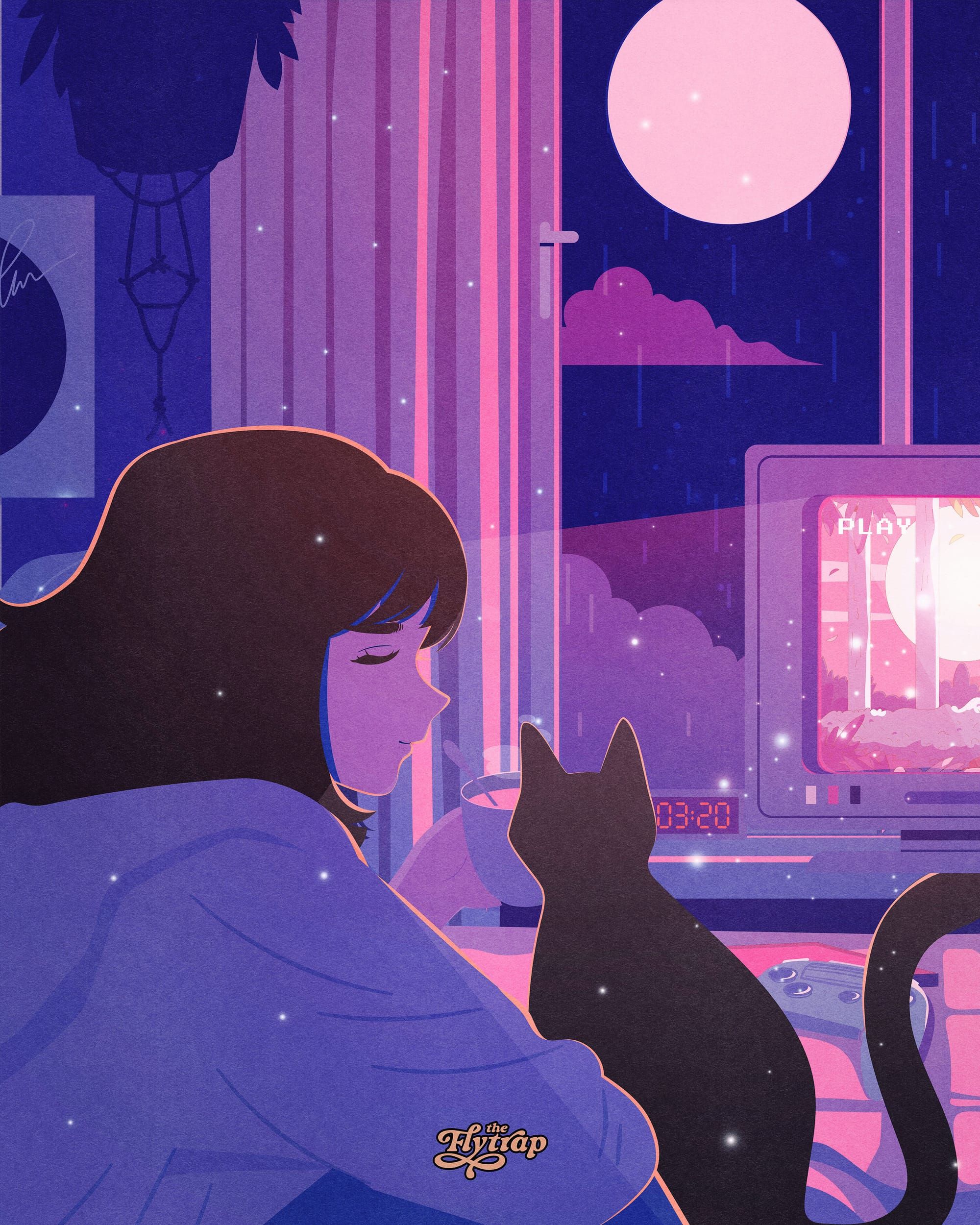
Autumn is upon us, and the first cool days undoubtedly have many of us already thinking about cozy vibes: Scarves, sweaters, a steaming mug of whatever makes you happy as you curl up with a blanket and a favorite TV show, a good read, or, for many millions of gamers, a cozy video game.
In the state where I live, Washington, we’re also experiencing an early start to flu season. Although I’ve gotten my flu shot and COVID booster already (get vaxxed, people!), I’ve been down with a nasty cold and literally eating chicken soup. This only makes me crave coziness even more, and one of the ways I’ve been retreating into coziness throughout the 2020s has been the cozy game.
I have often asked myself whether my cozy gaming at times crosses the line from self-care into sheer escapism—am I allowing a shiny new toy to contribute to my social atomization because I feel so disenfranchised and anxious that I no longer believe we can build a better world in real life? I have also asked myself whether cozy games don’t, in some respects at least, simply reinforce the tropes and values of capitalism, like “self-reliance” and “hard work.” Older games especially maybe even reinforce patriarchy (or at least the promotion of the nuclear family). Some, like Marvelous’s 2025 release Story of Seasons: Grand Bazaar (a remake of 2008’s Harvest Moon DS: Grand Bazaar) focus primarily on restoring a town to its former glory and/or bringing in more tourists to raise a town’s prestige, in this case through participating in and building up a thriving weekly market.
Some cozy games have become much more robustly inclusive, to the point that I would even dare to call their implicit values intersectional.
I decided to dive deeper into the phenomenon of cozy gaming in order to situate my hobby in a wider social and historical context and see if I couldn’t come to some conclusion regarding how to feel about it. What follows isn’t an old school “is it feminist” analysis (I would never!), but I’ll say this up front: While nothing in our world is completely untainted by the “invisible hand” of capitalism, there is a thread of feminist and progressive values running through cozy gaming that gives me hope in these highly fucked up times
The place to start seemed to be answering the question, "What is a cozy game, anyway?" Everyone can name examples, ConcernedApe's 2016 release Stardew Valley or Nintendo's 2020 release Animal Crossing: New Horizons, which surged to popularity right as most people were staying at home due to the COVID-19 pandemic. But the question of what makes a game "cozy" turns out to be a little more complex and nuanced than you might think.
Support from paid members helps us keep posts like this free for everyone! Consider becoming a paid member today to support The Flytrap, and gain immediate access to our entire back catalog of paid posts.
What is a Cozy Game?
“Cozy” is one of those notorious adjectives that everyone knows the meaning of but no one can precisely define. And when it comes to the concept of a cozy game, many fans put forth an expansive definition of, more or less, anything a particular player finds comforting and relaxing to play. For example, redditor lemonhoneyglow puts it like this:
“A cozy game can be any game that provides comfort, warmth and relaxation for the gamer. Since we are all unique individuals, this may look really different from one person to the other because what may relax and comfort me, may do the complete opposite for you.”
Relaxation is key.
That being said, cozy gamers often stress that cozy games “do not focus on fighting, competitive aspects, and stressful situations.” A lot of cozy games feature combat, but the mechanics tend to be simple and the consequences for losing are minimal, thus taking the stress out of it. Relaxation is key. “It’s the way in which gaming is used as a way to unwind, escape, or provide self-care that makes a game cozy rather than an easily defined genre,” one redditor maintains. Indeed, the cozy game is not a genre. It’s a vibe.
Gaming industry experts have distilled their own take on the formula, in the process placing the term “cozy game” into broad currency. It is now widely recognized that some games going back to the 90s are cozy games—particularly the Harvest Moon series (the Animal Crossing series came along in the early 2000s)—but the terminology is a later development. According to the experts, “coziness” is defined by three characteristics: Safety, abundance, and softness.
Naturally, there are elements in the often misogynistic broader gaming community who look down on cozy games for their noncompetitive nature, their lack of difficulty or high stakes challenge, their lack of violence, and their focus on “girl” things like relationship building and decorating one’s virtual home and farm. But the sheer popularity of cozy gaming indicates a strong desire for games of this nature among a large player base that consists mostly, but far from exclusively, of women.
The big AAA studios still largely avoid making cozy games. To be sure, they're invested in their big, already successful intellectual properties, and capitalism demands they put the majority of their resources toward producing the next blockbuster. But I can't help but wonder if part of the reason this remains the case amid the obvious post-pandemic desire for cozy games is baked in patriarchal assumptions. Games are supposed to be difficult and fast-moving. "Hardcore." More flashy and "cool" than cute. The gaming market is a "boy" market; make too many games "for girls" and your studio might get cooties.
Even so, in addition to abundant (see what I did there?) indie fare, these days a cozy gamer can indulge their inner Disney adult or take their cozy fantasies with a dose of Hello Kitty and the Sanrio gang. I have no love for megacorporations, but the presence of universally recognized IP in cozy gaming is probably good for drawing more attention to the phenomenon. And the rise of cozy gaming does seem to be slowly changing gaming culture for the better. Indeed, one media studies scholar has called it “a huge shift in gaming culture toward inclusivity.”
It’s funny how the concept of “cozy” and the in-game “work” required of the player sit so neatly together, but I know that I, for one, eat up the “work” aspect because it gives me a sense of making progress, which is sorely lacking in my real life in which I may never own a house or feel at financial ease.
It's no coincidence, then, that cozy gamers can enjoy unusually newbie-friendly fandoms in online spaces, such as r/GirlGamers and r/CozyGamers, not to mention beginner's guides like the one at HerCozyGaming. (A mostly non-toxic fandom? Is that even allowed??) Many recent cozy games, such as the Pokemon spinoff Pokopia, the My Time At series, and Coral Island also showcase obvious environmentalist values through themes of habitat restoration, reversing desertification, recycling and resource conservation, and more.
Collective orientation and cooperation are part of "cozy." Many farming and construction simulators are quintessential cozy games—take the iconic Stardew Valley, or My Time at Portia and My Time at Sandrock—and yet they task the player character with doing a great deal of work so that they and the surrounding community of NPCs may prosper. The player character often has to make major sacrifices to help restore or build up the community; sometimes there’s a conceit that other community members contribute to major projects as well.
It’s funny how the concept of “cozy” and the in-game “work” required of the player sit so neatly together, but I know that I, for one, eat up the “work” aspect because it gives me a sense of making progress, which is sorely lacking in my real life in which I may never own a house or feel at financial ease. That somewhat addictive false sense of progress may not be the healthiest thing in the world, but I do find the emphasis on community and on the collective in cozy games inspiring, in much the way Evette Dionne has found hope in depictions of collective action in other types of pop culture.
Because of the values expressed in cozy games and evidently shared in the fandom, the popularity of cozy gaming gives me some hope for humanity. Not a lot of hope, necessarily, given who has the most power in our world, but I'll take any hope I can get.
You can find Flytrap posters, tees, trucker hats, and more at our merch store!
All profits in September and October from our charity bandana designed by our Art Director rommy torrico will be going to Gaza Soup Kitchen.
Cozy Games, Diversity, and Inclusion
The surprise runaway success of indie farming sim Stardew Valley, which was made entirely by a single person, has sold over 41 million copies, and turned ten earlier this year, set the stage for the evolution of cozy gaming in the years to come. That success may have something to do with the rise of a craving for “coziness”—safety, abundance, and softness—during periods of fear-inducing external crisis. Ten years ago, if you didn’t do the math already, was 2016. Then 2020 came, and with the pandemic came a whole new wave of cozy gamers.
SDV now essentially defines the farming sim genre, with every new entry inevitably evaluated on the basis of where it adheres to, or deviates from, the SDV formula. To some extent, this is also true of the entire spectrum of cozy games.
Since Stardew, which included same-sex romance and marriage from the beginning, fans have demanded that option in other games. Story of Seasons producer Yoshifumi Hashimoto has denied that Stardew’s popularity had anything to do with that franchise’s newer releases including same-sex romance and marriage options, but one has to wonder.
Meanwhile, some cozy games have become much more robustly inclusive, to the point that I would even dare to call their implicit values intersectional. For example, Wylde Flowers, a farming sim where the player character, Tara, also learns that she is a witch who will need to assume her grandmother’s place in the local coven, features a racially diverse cast of NPCs that includes a gay couple and an explicitly nonbinary romanceable character.
Meanwhile Coral Island, a southeast Asian take on the cozy farming sim released in 2023 by small Indonesian studio Stairway Games, allows for nonbinary pronouns in character customization and also features nonbinary NPCs, one of whom is romanceable, in addition to explicitly partnered queer couples. Beyond that, Coral Island places major emphasis on beach and ocean cleanup (also mermaids, because mermaids), the greed and depredation of international corporations, and upcycling and recycling. One of the romanceable NPCs is a single mother who is actually depicted with stretch marks—I couldn’t believe my eyes when I noticed, but I was not misinterpreting a thing, the stretch marks are canon. The game’s racial and ethnic diversity is robust, and it includes neurodivergent representation, though it unfortunately lacks disability representation even though there is a center in the town that provides wheelchairs (and bikes) that nobody uses.
Cozy games aren’t perfect. And they certainly aren’t a panacea for what ails us. But when it comes to interactive entertainment and the world of gaming, which is so often hostile to women and marginalized people, cozy gaming and the community around it are having a positive impact and fostering good values.
For that reason, I’m gonna let my cozy gamer flag fly, and this cozy season I will definitely be spending some of my free time snuggled up with my Steam Deck and my Nintendo Switch 2, a mug of hot cocoa, and my cozy games.
This piece was edited by Andrea Grimes and copyedited by Katelyn Burns.