Loose Women Deserve Their Flowers
When a woman has too much desirability, too much beauty, too much pleasure in being seen—she is too much woman.

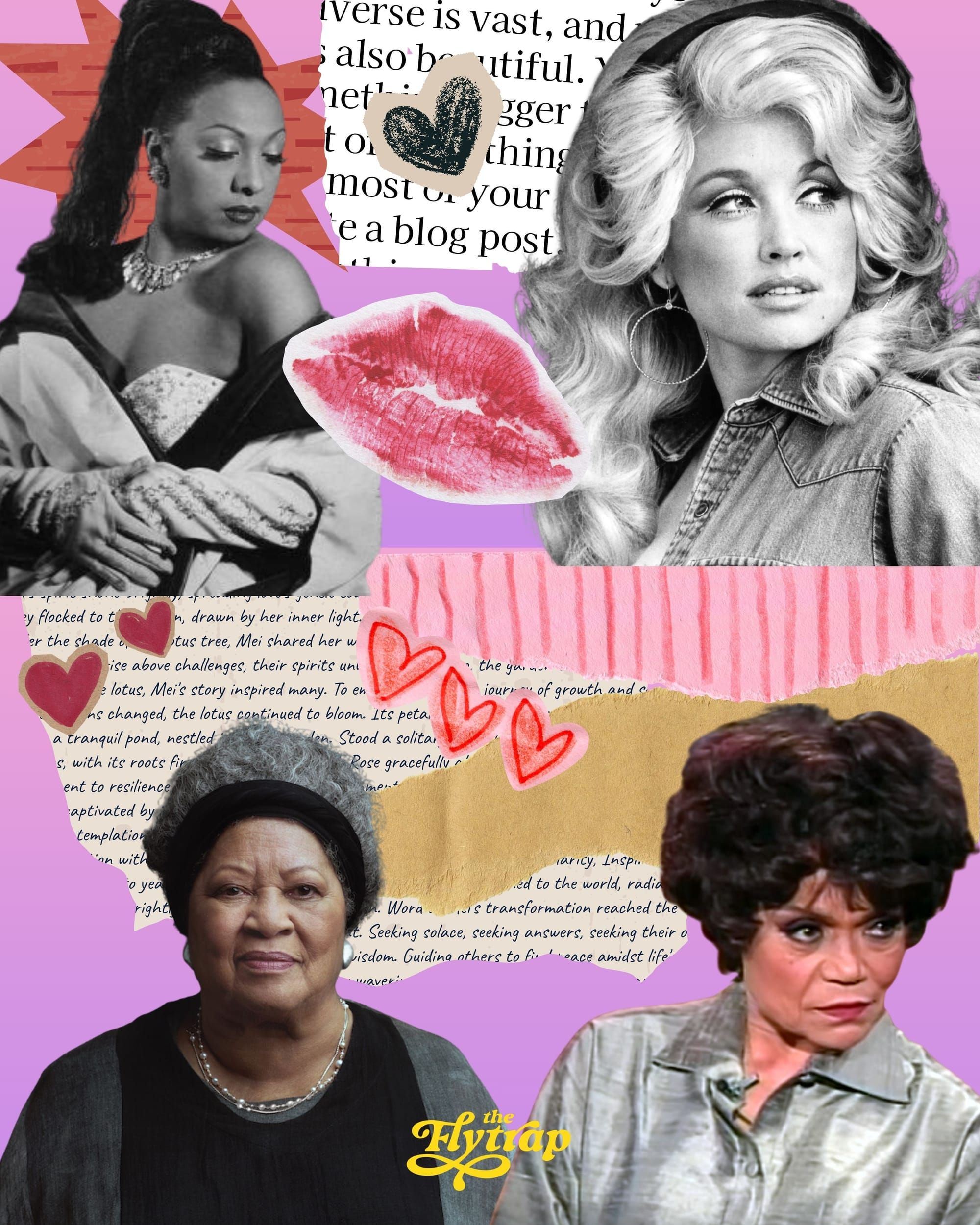
In the 2019 documentary Toni Morrison: The Pieces I Am, the eponymous author gleefully described her time at Howard University with a mischievous laugh. “When I got to Howard,” she shared, “I was loose! It was lovely. I loved it. I’m sure I overdid it, but I don’t regret it.” It’s hardly the most important line or moment of the two-hour film, but it’s important to me.
Morrison was speaking about a time in her life characterized by youth, socializing, sexual freedom, and unfettered fun. This is perhaps a strange collection of adjectives to associate with the common conception of Toni Morrison: Nobel Laureate, literary giant, respected thinker, keeper of a uniquely Black and American canon. Great women, respected women, lauded women become retrospectively dignified in a way that insists their importance was seeded from the outset. In an offhand anecdote, Morrison handily disrupted a narrative that seeks to cage her, as she was then and is now, even posthumously. Before Toni Morrison was emblematic of modern American literature, Fran Lebowitz’s best friend, Chair of Humanities at Princeton University, inspiration for Zadie Smith and Ta-Nehisi Coates—she was loose.
The loose woman is important to me, as she should be to us all. It’s one of the most enduring cultural archetypes we have, across time and borders, even if we now struggle to name her as such. Tramp, thot, bimbo, doxy, tease, coquette, dame, heffa, slattern, dolly, wench, jill, vamp, skirt, trollop, slattern, moll, hussy, slut, whore, chick, harlot, vixen, ho. The vocabulary is in constant flux, but the accusation beneath it is relatively consistent. Above all else, the loose woman has an inappropriate relationship with and to her own desirability. She is not only aware of the eyes on her form, she refuses to shy away from it. Maybe she enjoys being looked at, going out of her way to draw stares. Or she might build her livelihood from that desirability, performing for an enraptured audience that imagines and manufactures an intimate knowing with her public persona. In all cases, she refuses to shrink away from desirability or punish herself with anonymity. This makes her dangerous, not only because she has sex, but because she understands sexuality as something to inhabit at will, rather than something imposed upon her by others.
Hey there, comrade! This post is paywalled, but if you want to keep reading and access our entire back catalog, we're offering you a week-long free trial.