
The Film of the Year Is Just An Old Story With New Faces
“Obsession” is a great take on an old horror trope, but a groundbreaking feminist film it is not.
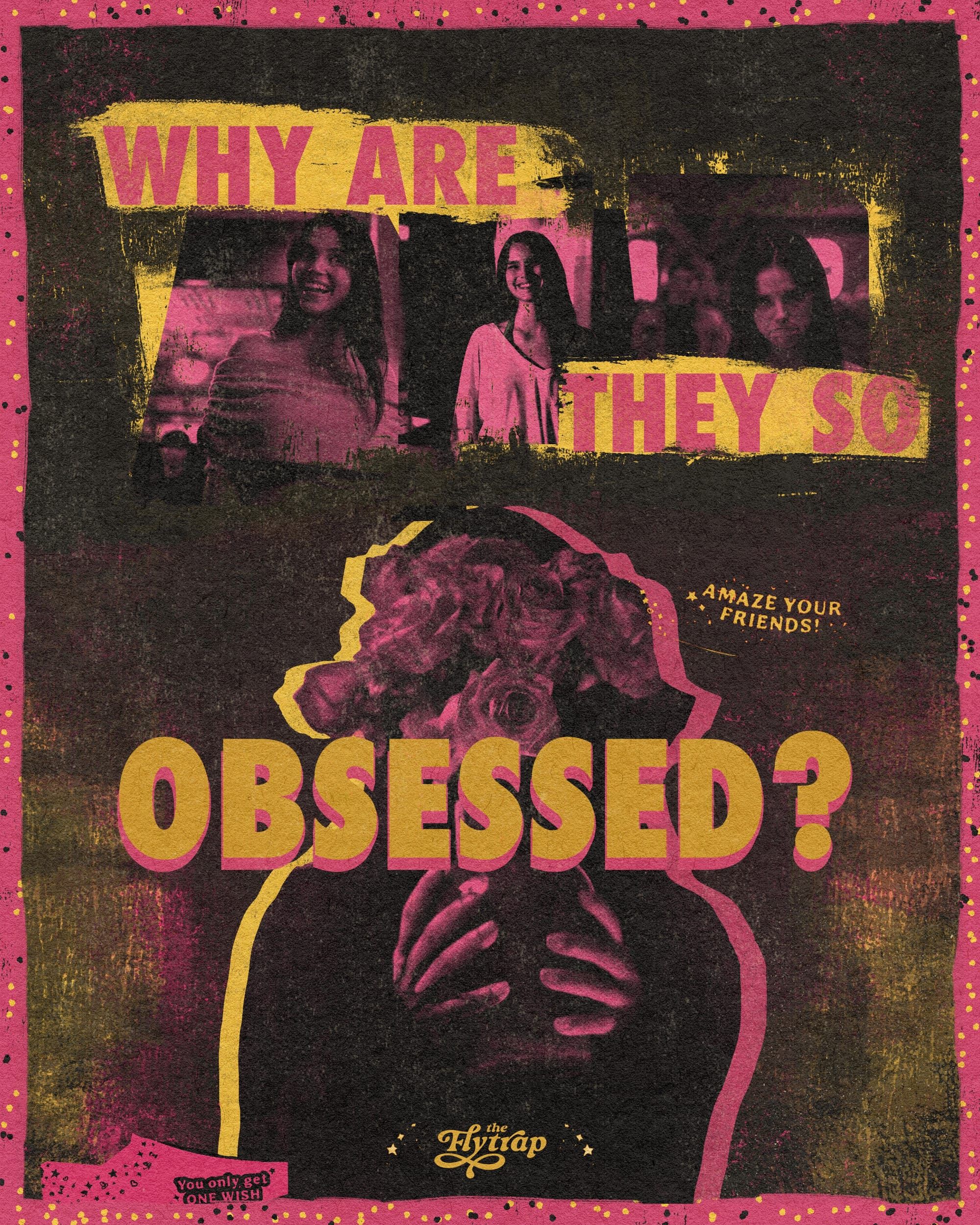
This story includes major spoilers for Obsession.
In Curry Barker’s second feature and first theatrical release Obsession (2026), twentysomething Bear (Michael Johnston) claims to be desperately in love with his coworker Nikki (Inde Navarrette). When the film begins, he’s practicing asking her out, spilling his heart out to a beautiful young waitress at a diner. He says that he would “choose [Nikki] over everything.” Later, he comes home to his lonely house to find his cat, Sandy, dead on the floor.
That night, overcome with despair, he stares at pictures of the object of his affection in the dark, crying for her love. Nikki calls him soon after, insisting that he come out for bar trivia. He decides this is the night to make his move, but instead of simply getting her a gift and asking her out, he makes a wish for her to love him “more than anyone else in the fucking world,” right in her driveway as she is walking away from his car.
To make his wish, Bear uses the ominous novelty toy One Wish Willow he bought earlier, which turns out to be very powerful. The change is immediate—Nikki whips back to his car and begs him to stay the night. Suddenly she wants to spend all her time with him. It’s obvious, even to him, that something isn’t right with her. But after some light protest, he decides to pursue the relationship. It doesn’t end well.
Obsession is a modern take on an old story about receiving your deepest wish: There’s always a downside to getting exactly what you want. For Gen-Z audiences, this narrative was received as novel and genre-shifting, a new kind of horror film that goes beyond gore and deals with real issues too. Some even called it a feminist film. But it is simply a tried-and-true horror formula retrofitted for young modern audiences.
In an interview with Variety, Barker reveals that he was inspired by the Season 3 episode of The Simpsons, “Treehouse of Horror II,” which includes a story about Homer bringing a severed monkey’s paw home to Springfield. The Simpson family uses the paw to make their wishes come true, but they always seem to backfire. When they wish to be rich, all of their neighbors begin to hate them. When Lisa wishes for world peace, it makes the Earth more susceptible to an alien invasion.
Making a wish always comes with a consequence. The “monkey’s paw” narrative predates The Simpsons, first written as a short story by W. W. Jacobs in 1902. Since then, the story has taken on many forms in film and television. This is true for most classic horror stories—they’re retold over and over with different characters and variations.
For Gen-Z, Obsession was more than just a fun time at the movies—many online took it seriously as a novel commentary on male entitlement, misogyny and abusive relationship dynamics.