
How Did Brazil Beat the Fascists in the Elections?
Reflections from inside the popular movement that re-elected president Luiz Inácio Lula da Silva against all odds.

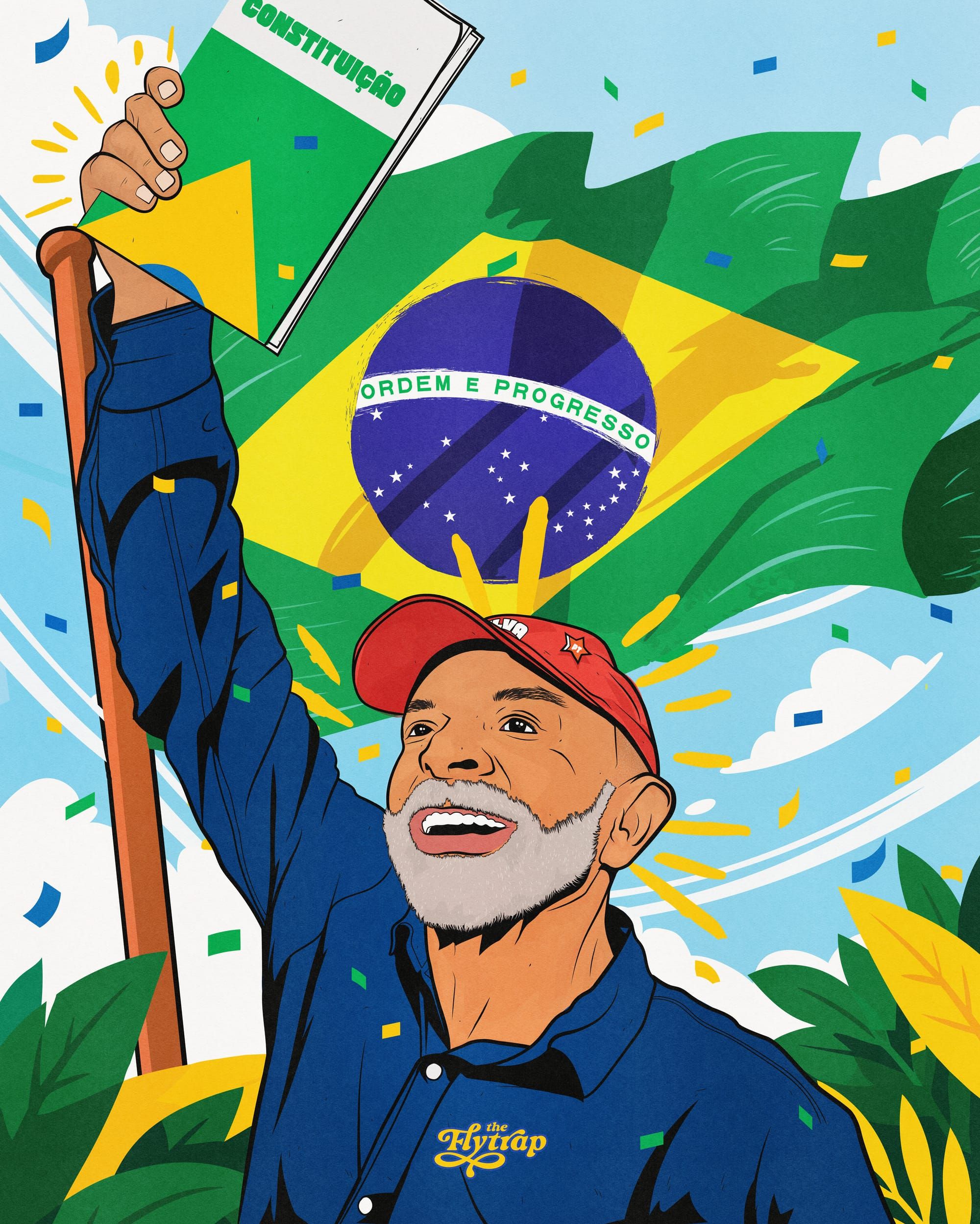
After the first round of the elections in Brazil, when far-right candidate Flavio Bolsonaro overtook incumbent left-wing president Luiz Inácio Lula da Silva by just under 2%, I couldn’t sleep for longer than five hours. Every day for two weeks, I would wake up at 6 a.m. in a panic, my whole body on fire with cortisol, like my ancestors were warning me that something was very, very wrong.
Despite the best efforts of the far right, I grew up in a country that has insisted on keeping the memory of the far-right violent military dictatorship that reigned from 1964 to 1985 alive for moments exactly like this. In the days following the first round of the elections, Bolsonaro—the son of Jair Bolsonaro, a man who is currently imprisoned for attempting a coup d’état in January 2023—declared he would change the constitution and “redemocratize the country” after his party swept the majority in Congress.
He added that the Bolsonaro family would be “in power for decades.” The week after Bolsonaro's first round victory, his party, Partido Liberal, posted art with his face that was remarkably similar to Benito Mussolini propaganda, before quickly deleting it and issuing an apology. In an interview with Folha de São Paulo, Bolsonaro hypothesized that, if he won the presidency, he would “make the use of force” in the Supreme Court to force amnesty for his father and other anti-democratic allies .
Despite all evidence and history of the Bolsonaro family’s anti-democratic behavior, many people and commentators said the left was being “alarmist” when we warned about the risks of democratically electing another Bolsonaro to the presidency. Those critics were irrelevant to our struggle and were duly ignored as the people organized around re-electing Lula. In times of urgency and fascism, so-called “reason” is the enemy of direct action. Calls for “being reasonable” only sought to slow us down.