
What Black Homes Remember
From plastic-covered couches to Black Jesus portraits, Black interior design preserves history amid rampant displacement.
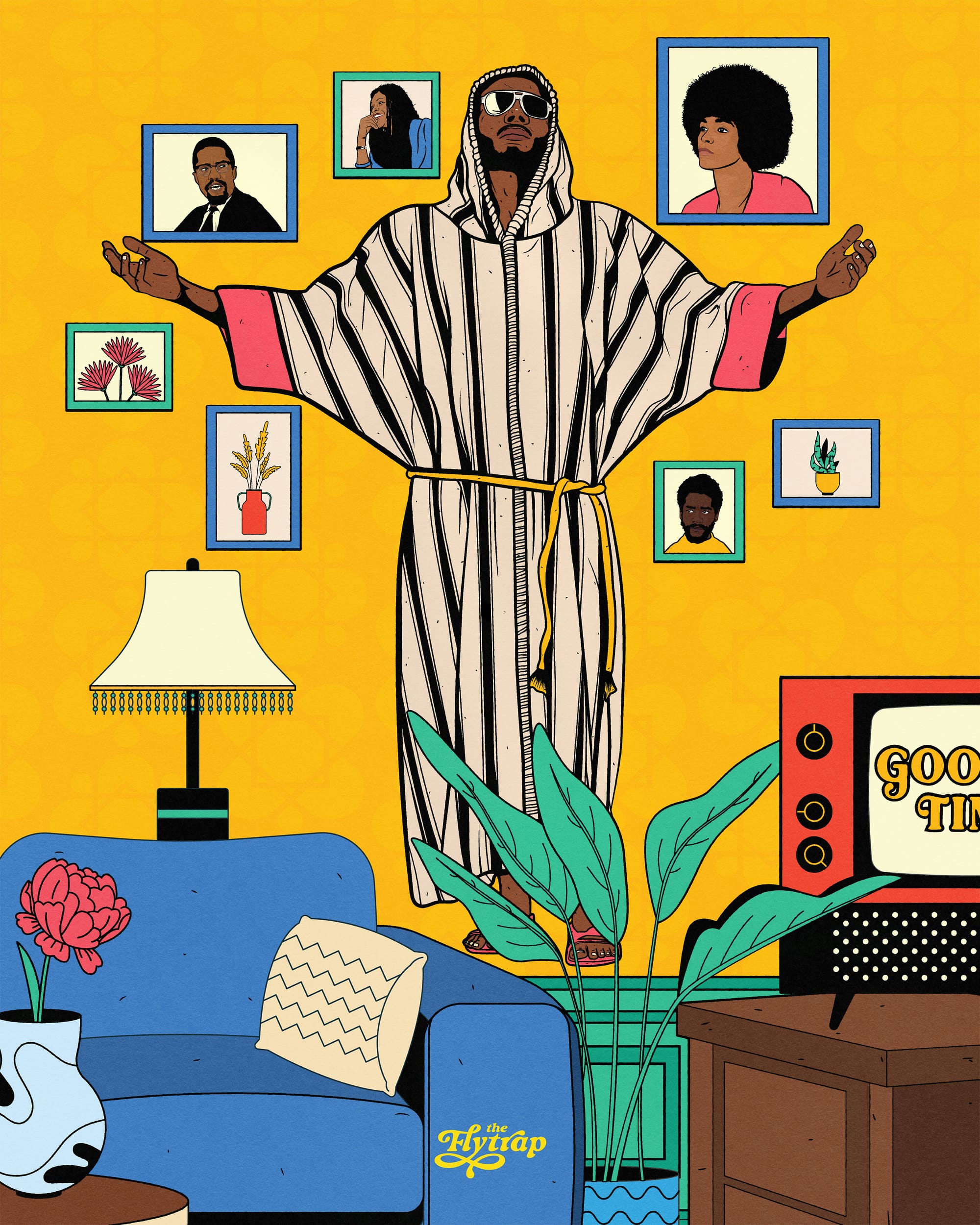
Kendrick Lamar is in his domestic era. Over the past three years, his visual palette has drawn increasingly from the homes of our Black elders. It’s the plastic on the couch in the “Not Like Us” video and the delicate sheer curtains and box TV covered in ceramic knick knacks in a photoshoot for Mr. Morale & the Big Steppers. It’s the black panther statue and replica of Vincent Barzoni’s “His Voyage: The Life of Black Jesus” painting, marked with a $40 sticker as if it just came from a thrift store, in the 2024 video for his single “squabble up.”
When the “squabble up” video first dropped, I was surprised by how many YouTube comments and social media threads came from other Black folks who’d seen those exact items (or very similar ones) in the homes of their relatives. I’ve seen other viral conversations just like these over the past year, where working-class Black folks have bonded over the shared style within the homes of their older relatives: specific pieces of furniture, bedding, art and knick knacks that so many of us seem to own. It got me thinking: How have these small decor choices become such strong affirmations of Black identity across generations?
Black historical memory is increasingly under threat, especially from the Trump regime: For example, Black history museums and archives have faced funding cuts and censorship as part of a federal war on DEI initiatives and “woke” culture. But other threats are also happening on the ground. According to one 2023 study, Black renters make up more than half of all eviction filings in the U.S.
At the same time, rising rates of gentrification are pushing Black communities out of their neighborhoods, while historically Black neighborhoods remain on the frontlines of a climate crisis causing mass pollution and destruction. Against these increasingly dire odds, preserving the history of ordinary Black homes is a subtle means of affirming our shared relationship to displacement, domestic warfare, and ecocide.