The Vulnerability of Visibility
Ten years ago, Black women were more visible than ever. It didn't get us—any of us—very far.

Since I’ve become an adult, many years, including this one, have become blurry in my mind’s eye, one day blending into the next until 365 have passed within the seeming blink of an eye. But 2016 remains an exception.
I still remember 2016 with stark clarity and a strange fondness, even a decade later. There are many reasons my mind has so fiercely held on to that year: After freelance writing for several years, I was able to leave teaching and secure my first full-time job in journalism as a senior news and “identity” (yuck!) editor at a now-defunct women’s lifestyle website. I moved back to New York City, my first time returning home as an adult, and began living my best Khadijah James life in a decent-sized Brooklyn studio apartment with a coveted brick accent wall. I gallivanted around the city with my friends, enjoying a NYC summer that I wished would never end. I even helped orchestrate editorial coverage of the Democratic National Convention, presidential debates, and even that dreaded night when Donald Trump bested Hillary Clinton.
To paraphrase Sammie, also known as Preacher Boy, a character in the Oscar-winning film, Sinners (2025): Before the sun went down—or before Trump’s blatant racism, xenophobia, and ableism helped usher him into the White House—2016 was one of the best years of my life. When I recall 2016, it is also often through the prism of pop culture and politics. It was the year that Black women undoubtedly became (hyper)visible, not just to each other, but to the broader fabric of American life.
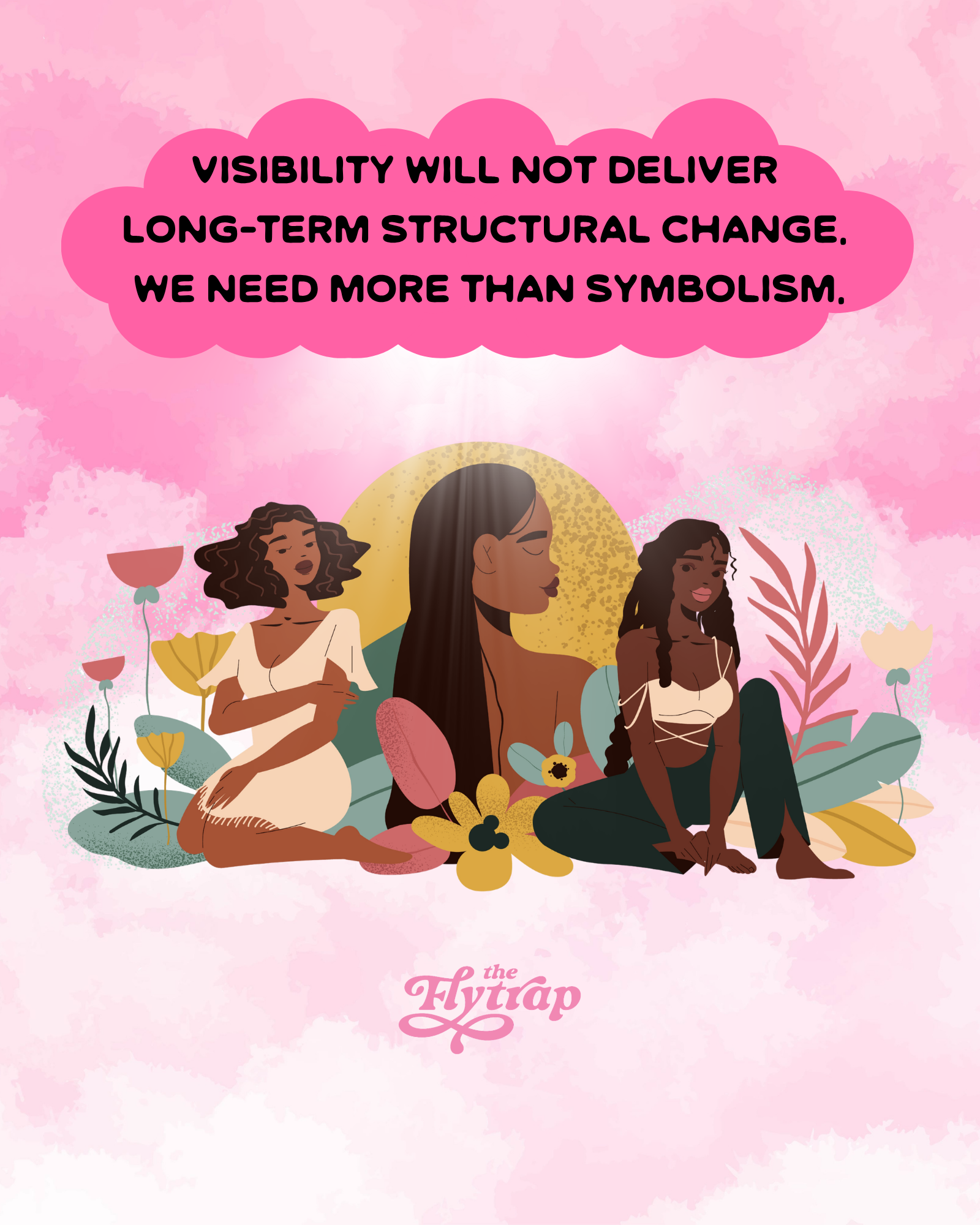
What becomes of Black women when we are treated as if hypervisibility is a legitimate substitute for structural protection?
Hey there, gentle reader! Did you know we run original features like this every Tuesday for The Flytrap's paid supporters? Consider upgrading your membership to keep reading and get full access to our archives! Our memberships start at $6.66/month for the budget conscious...