
Furious Women
In the Epstein era, if we can’t get justice, then at least we can get vengeance on the small screen.

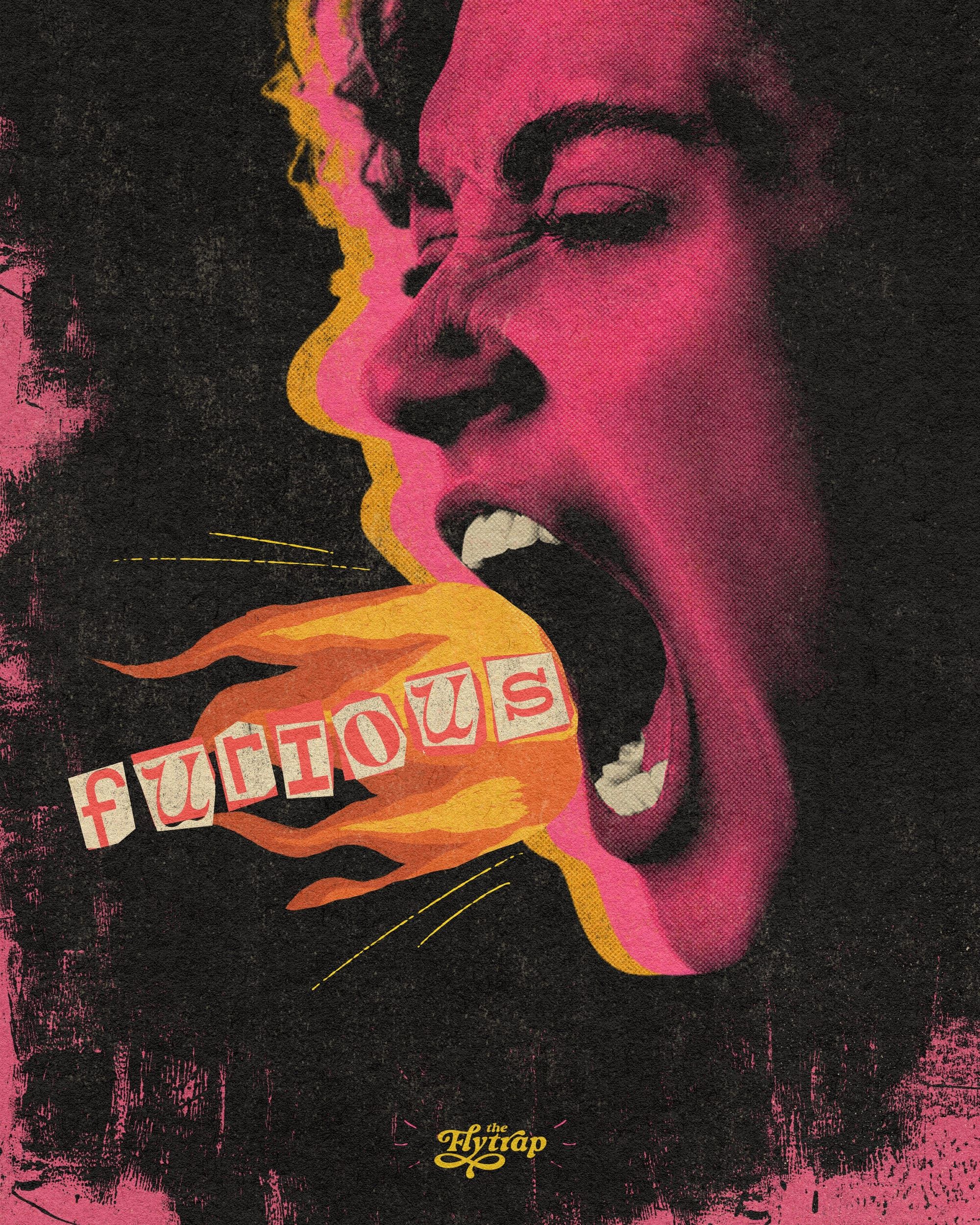
This story includes spoilers about Furious and Crystal Lake, as well as descriptions of fictionalized sexual violence.
Furious, the sleeper hit that debuted on Hulu in July, opens with a scene that’s both chilling and jarring: A middle-aged white man in sage green shorts and a white button-down shirt is dragging himself slowly across the marble floors of a bathroom. He’s groaning, clearly in pain, while also struggling to consistently breathe. It’s unclear what, or rather who, is stalking him, but his fear is palpable.
He needs to escape—now—and his primitive need to fight or flee radiates off the screen. There’s a moment where it seems that he might actually succeed in escaping. He’s pulling his body down a hallway and toward the stairs that lead to an elaborate living room and the front door, but then he sees his assailant, a white woman whose face is concealed by an alluring cat mask, coming up the stairs. When she spots him, a look of pure terror and regret crosses his face.
“Where are you goin’?” she casually asks him. “I’ll be back in a minute.” It’s Halloween night, and the still unnamed woman has promised a candy bar to a child who's trick-or-treating with his mother. When she comes back in the house, the man has made his way to the stairs, but he’s too weak to walk down them. When he tumbles down the stairs, the woman approaches him, and he begins pleading for his life. She covers his mouth to quiet him. She then removes a syringe and a vial filled with some kind of clear liquid from a silver, tin case covered in child-like stickers, and casually asks him, “It’s probably time, right?”
She empties the entire syringe into his arm. As he struggles to breathe, she lays beside him on the stairs, turns her head to face his, and whispers, “I don’t really like listening to you. I don’t like the sounds you’re making. But I love your smile.” When he finally stops breathing, she gently touches his cheek and his lip before sitting up and eating candy corn out of a glass dish. She slowly smiles as a look of satisfaction crosses her face; he’s dead, so her mission is complete for the night.
Violence often begets violence and creates additional harm. But when violence is fictionalized, it can become an escape hatch.