Un-Loving ‘Love Island’
The messy discourse around Season 8 of Love Island USA exposes reality television’s deeply entrenched anti-Blackness.

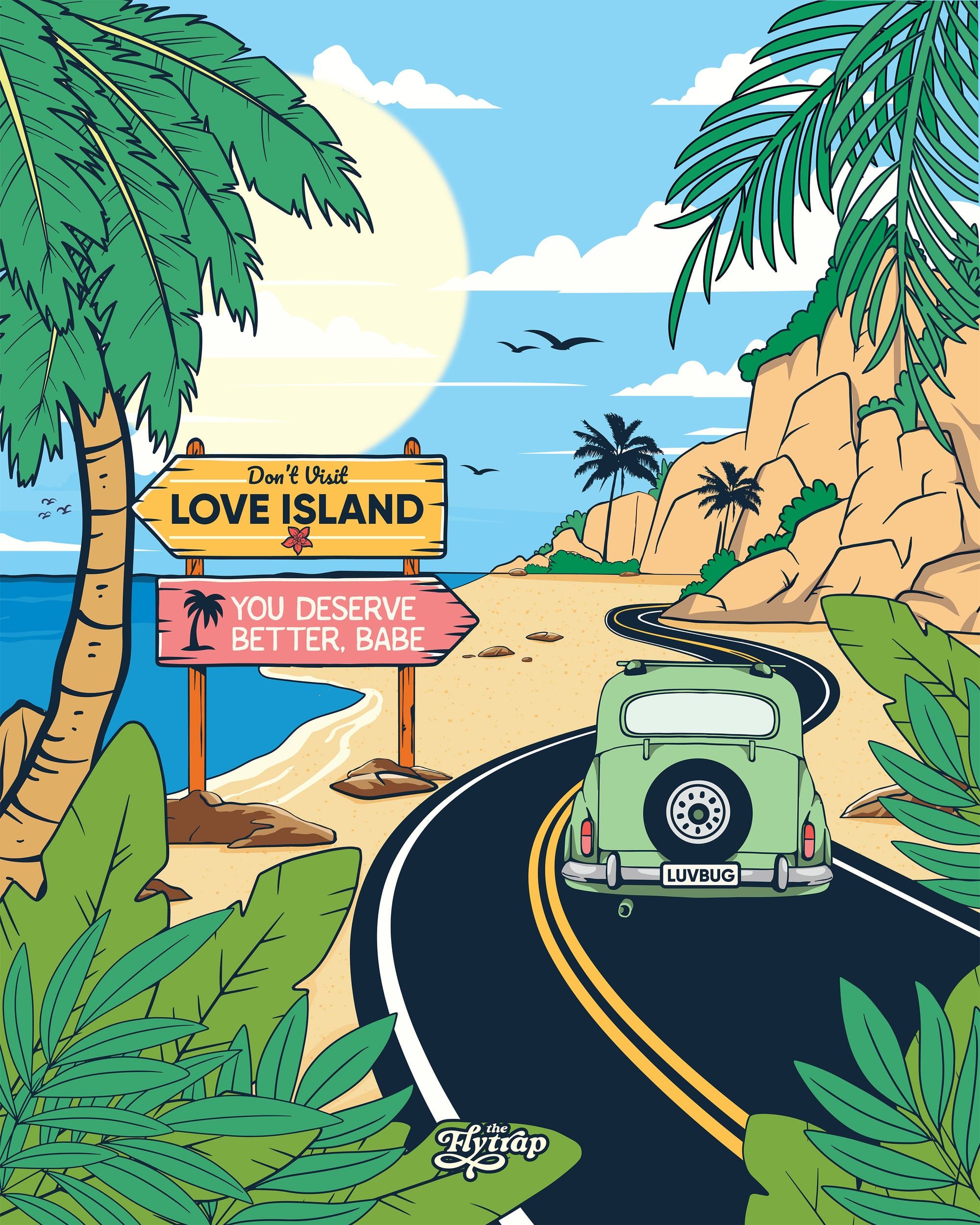
I know summer has officially arrived when two things happen: The sun begins setting after 8 p.m., extending the length of the day and warding off my seasonal depression, and Peacock releases the new season of Love Island USA. Here’s the premise: Skinny, conventionally attractive twentysomethings descend on a luxurious villa in Fiji for six weeks of good ol’ fashioned reality TV hijinks.
The cast members, who are called “islanders,” flirt; couple up; recouple with “bombshells,” or villa newcomers there to shake things up; participate in an array of smooch- and grind-heavy challenges; and occasionally vote to eliminate each other. The ultimate goal is to win $100,000—typically split 50/50 between the winning couple—while earning the public’s favor and, for the lucky few, falling in love.
Best of all, new episodes air every day except Wednesdays and Saturdays, so the show is happening nearly in real time—a perfect equation for online discourse. Love Island USA is the epitome of debaucherous fun, an ideal amalgamation of all the things that make reality television so enticing: chaos, drama, strategy, humor, relationship tension, friendship pick-me-ups, cattiness, camaraderie, luxury, and did I mention drama?
But there was a different, heavier energy surrounding Season 8, which premiered in June. Instead of Love Island USA being another form of summer escapism, I was wading through endless discourse after every episode. I’ve been watching reality TV since the late ’90s, so the postmortem convos were normal, especially in the social media age. But it was peculiar to see political terms being tossed around so carelessly: Misogyny. Gaslighting. Toxic Masculinity. Accountability. Manipulation. Emotional Safety. I thought I’d stepped out of a fluffy TV show and into a graduate-level gender studies course. And, I was most alarmed by the fact that Black islanders were often at the center of these maelstroms of criticism.
“A lot of people don’t have the range to critique Black people without that critique becoming entangled with their own anti-Blackness.”
Hey there, comrade! This post is paywalled, but if you want to keep reading and access our entire back catalog, we’re offering you a week-long free trial.