Ask The Flytrap: I'm Here, I'm Queer, and I'm Trying to Live My Best Poly Life ... with Long Covid
The plague really fucked my shit up.


Welcome to your new favorite advice column from your favorite feminist journalism collective! New editions are published every Wednesday. Read on for the drama, the tea, and the commiseration—and if you want to submit a question, scroll on down to the bottom of this post for more info.
Let's get into it:
Hey Flyteam,
I am a queer chick in a straight-passing long-term relationship with another queer person. My relationship is great and my partner and I are happy, but neither of us know what to do about this one thing that only seems to be affecting me.
Before the plague, we were non-monogamous. We generally had a great time, until we didn't. I got hit by A Big Trauma, and then lockdown hit, I got long covid and laid off, and all of this snowballed into me having a hard time trusting anyone, especially a potential new partner, to have any aspect of my physical, emotional, or sexual safety in mind.
In lockdown, I realized I was queer, but I didn't feel safe acting on it. Fast forward a few more years, and I get crushes on people all across the gender spectrum but I have no idea a) how to do anything about that and b) how to advocate for myself with safety stuff. I feel like I read as "straight" and I want to not do that, but I don't know how. On top of everything else, I have a misguided idea that people who aren't cis het dudes would generally be cooler about a) my safety/consent and b) not giving me a debilitating respiratory disease, but like, we've all read "In the Dream House." So what do I do? I have a lot of anxiety about showing up as a straight-passing bisexual in queer spaces; I've seen all the memes about bi girls with husbands at pride, and already don't feel queer enough, and then you add in "hey, I mask all the time, hope that's ok? also I have trauma please be gentle with me?" Ugh, cringe. Am I gonna be monogamous forever?
Thanks,
— Skittish Bi
Howdy Skittish Bi,
Andrea and s.e. are tag-teaming on this one since we have a blend of relevant experience. Be forewarned: We had a bunch of thoughts about this, such that we ended up adding literal mf'in subheds to this post. We're that serious about it! So strap in, friend.
To open, we are so sorry about your Big Trauma, and glad you have a supportive boyfriend (and hopefully supportive friends too). Wherever you're at in your recovery journey as you integrate this huge event into your life, we know how hard it is. Be kind to yourself and remember that if you tiptoe into dating and realize you're not ready for it yet, you can always take a pause.
Before we plunge into your questions about safety and showing up in queer spaces, let's check in on how conversations about poly are going with your partner. It sounds like you both are communicating and talking about what poly looks like for you, so this advice may not be necessary, but your concerns around your physical health and safety affect both of you. Your partner also needs to be covid-cautious and thoughtful in his own relationships to protect you.
Hey there, gentle reader! Did you know we run original features every Tuesday for The Flytrap's paid members? Consider upgrading your membership to get full access to our archives! Our memberships start at $6.66/month for the budget conscious...
When it comes to covid...
While s.e. doesn't have long covid, they know a lot of people in the community. It really sucks to navigate the adjustment period into a chronic illness (and/or disability, depending on how you identify) while being painfully aware that you got there because society failed, and a lot of people are not upholding the social contract to care for one another. That definitely sets a person up for being wary about new partners (and friends). Two things to keep in mind:
- There are people out there who are caring and responsible with those who have experienced trauma, and who put the same energy into building mutual trust to keeping people like you and many others safe.
- There are also people who are not, and they are not worth your time and energy.
If you're crushing on people you are in community with, they're already aware that you mask full-time...and you probably know who is supportive and respectful there. Green flags: Asking if you want to meet up outdoors, especially if you are eating; voluntarily masking up or asking you if you'd be more comfortable if they masked; supporting you if someone makes a shitty comment; checking in about your capacity and energy level when inviting you to events; acknowledging that long covid is real (low bar, but here we are).
If you're on the dreaded apps, make sure your main profile pic is you in a mask to show that you're not messing around, and include that in your disclosures, too. You can also explicitly say that you're interested primarily, or only, in fellow covid-cautious people/those with long covid. Some people are going to be turned off by that, and that's great: You don't want to date them anyway.
One advantage of focusing on people who share your experience is that many are also thinking about consent, safety, and taking it slow already. As people familiar with the broken promises around covid, some of whom may be carrying their own trauma, you may have a lot in common when it comes to concerns about trust. And they're going to know how to keep you safe and why it's important.
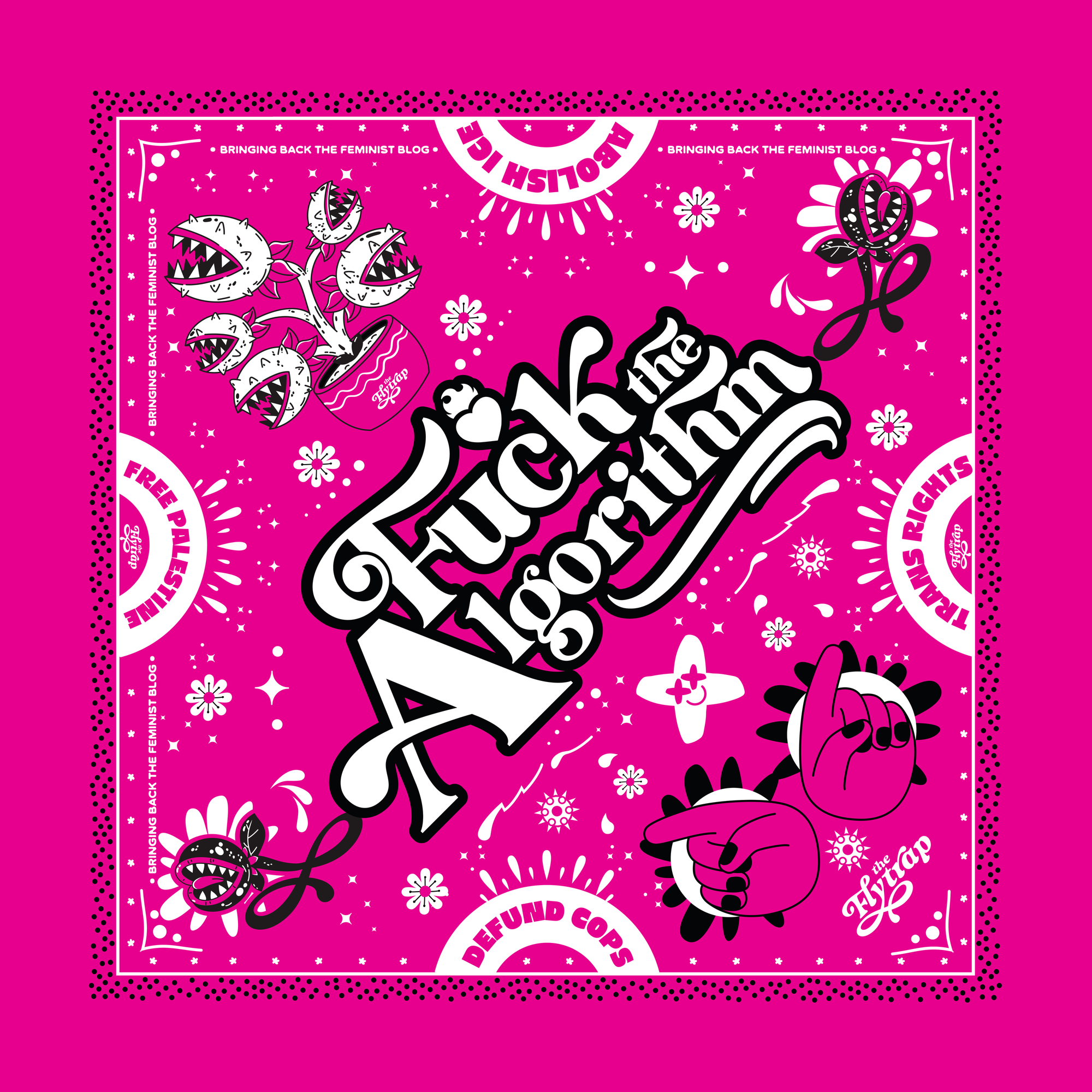
Contributing to our community is very important to us at The Flytrap.
All profits in July and August from this fantastic bandana designed by our Art Director, rommy torrico, will be going to the Homeless World Cup Foundation, which supports unhoused people all over the globe with football programs.
When it comes to trauma...
When and how you choose to disclose trauma is up to you, but it's not usually a thing that comes up on a first date. After a few dates with someone, their willingness to support your covid-related safety needs should be pretty obvious, which will also be an indicator of whether they will care for you in other ways. If they're shitty about masking, you obviously don't want to keep dating them, so you've dodged the secondary conversation about trauma.
When you have been dating for a while and you want to share more about yourself as your connection deepens or it becomes necessary to start talking about the trauma because it's affecting your relationship in some way, you don't have to do everything all at once. Opening up about trauma can start non-specific, so rather than "[this thing] happened to me," it's more "I am processing some traumatic events and would like to take it slow," while thinking about specific accommodations you might need to feel safe. If it's helpful and you're more of a text person, sending a letter, postcard, or email is always an option—and you can also set yourself up with a script for a conversation to make sure you hit everything that's important to you. You might also pull together some resources so they can learn more and you don't have to do 101 stuff.
Before you have that conversation, know that there's never just one conversation, and your partner should respect that. You can leave the door open to future conversations, and you can also set some boundaries around what you are comfortable talking about. Depending on the nature of the trauma, these bigger conversations could also involve things like safety planning around how to handle situations where you feel very activated and what kind of support you find most helpful.
When it comes to being queer enough ...
Andrea here, with some advice on not feeling like you present as queer as you are to ~ the world ~! First off: I can't tell you how many other queer folks are struggling with variations on this very issue. You could not be less alone, and not just because I myself struggle with the same ish. There are gazillions of us! The (great!) Autostraddle has a bevy of advice for letter-writers on the subject (here's a recent example). When I say "gazillions," I really mean it — the problem of feeling ~ not queer enough ~ is hardly limited to later-in-life-bi-revelators such as ourselves. It includes queer-identifying people who haven't had any queer relationships, people who are transitioning, people who are questioning, people who've survived partner violence and sexual assault, and people who have straight up (pun entirely intended) re-oriented their poly-ness or queer-ness after years of being one way or another. I think it's helpful to name the problem: cultural queerphobia writ large, internalized even by queer folks, and the resulting bi- and pan-phobia that also permeates our own queer communities. You haven't done anything wrong! The water we swim in is the problem. Period.
I'm sure you've heard problematic terms like "gold star lesbian" and the like, which privilege certain kinds of abilities, community access, political experiences, and geographies; in a perfect world, we all get to know and live as the people we know we are from birth. This is not that perfect world. I spent my 20's claiming I was the straightest arrow ever shot; I disavowed and devalued every crush I'd had on a non-cis-het-dude as a mere misguided lark, a fluke, a passing fascination. It wasn't until I was in a (married! het-presenting!) relationship I felt truly safe in, in my early 30's, that was able to name the feelings I had as anything else. Ask me today? I'm a monogamous pansexual; I've got no designs on leaving my husband but boy howdy I can get down in theory with all kinds of folx. If that dude shuffles off before I do? I'm gonna be the flirtiest bitch at the gay bar. I for real cannot imagine choosing to bang one more cis bro on this god-forsaken planet. And I'm still not that bi/pan lady at Pride; I just don't like going to huge public events! If you find me at a mass parade or protest, you should assume my body has been taken over by aliens.
There are so many beautiful ways to be queer, but the most beautiful way, I think, is to know for yourself that you're queer. I want to be so very clear: that's enough. If you never told a single solitary other soul, never acted on a single impulse, never watched queer porn or wrote or read queer fanfic, your queerness is still valid and of high value, because it's you. But you do want to signal who you are to the world, and you have options! You can go soft — rainbow or flag emoji of your choosing on your social bios, casual mentions of queerness in conversations. And you can go hard — pride parade it up! Make a huge announcement at the next big family/friend event! I myself? Always make an effort to queer up conversations with friends, colleagues, and neighbors who assume I'm straight, by saying, without fanfare: I didn't come out as queer until my 30s, and it's understandable that folks read me as such, but I'm simply not. No details needed.
Straight-presenting/passing folks can also do some of our best and most self-validating work by being active envoys for our queer communities. I testify against anti-queer legislation here in Texas whenever I can, even by submitting written remarks or letters; I wear loud pro-queer gear and have my car sticker'd up with community symbology. Weaponizing my Nice White Straight Lady persona in the service of getting people free makes me feel tremendously powerful and useful.
Queerness is about who you are, not who you bang. Anyone who wants to take that away from you is not moving in service of liberation. You're the only proof you need.
To sum up ...
The tl;dr: There are all kinds of people in the world with all kinds of stuff going on, and you're not alone in these lived experiences. We're all works in progress and growth is what makes us human. You're not broken for having some really intense life events to reckon with and you are absolutely not undateable. You're rad exactly as you are and you're going to have great relationships with people who are privileged enough to get to date you.
— Andrea and s.e.
Submit your queries about life, love, and everything else, and a Flytrap co-owner (probably Andrea, aka the Bad Advisor, though we'll float questions to the entire collective and find the right person for the job) will tell you what the fuck is up.
Submissions must be under 500 words, and while we can't guarantee we'll answer every letter, for those we do: we'll give you the best ideas we have about whatever the hell is going on with you. (Caveat, etc: we are not therapists, lawyers, accountants, actuaries, psychics, coaches, doctors, or anything besides a whole bunch of people who have lived through a bunch of nonsense.) If for some reason the submission form doesn't work, holler at us: advice@theflytrapmedia.com
Please remember that every submission has the potential to be published; we'll remove identifying details as we're able. Don't blow up your own spot, but please give us the goss.