Algospeak Will Be the Unaliving of Me
Maybe we want to bare our teeth.

The anecdote that middle school students are writing essays about Hamlet unaliving himself is everywhere, deployed as an illustration of yet another way the youths are ruining the sanctity of the English language. Those wacky kids and their neologisms have been a subject of adult ire for centuries, a stand-in for a hatred of change and a fear of children growing into whole beings with their opinions, identities, and culture—a new generation rising to displace the old. Often, these adult concerns are unfounded, the product of intergenerational rivalries (“kids these days”). But sometimes, the worries of an older generation that has witnessed both progress and fallback reflect a larger concern. We should all be thinking about how shifts in the English language reflect social change and simultaneously affect our culture, not in a “we used to live in a society” or “retvrn” sense, but in a “hey, are we actually handing people the instruments of our own oppression?” sense.
"Unaliving" reflects a phenomenon known as algospeak, referencing the fact that people are coming up with euphemisms to avoid terms they believe are censored by algorithms on platforms such as TikTok. Advocates argue automated moderation suppresses their speech, sending them to the dreaded land of the shadow ban and punishing people talking about social issues and their own experiences. It is reactive insider language, developed not as a form of building community but as a response to, and supposed defense from, external forces.
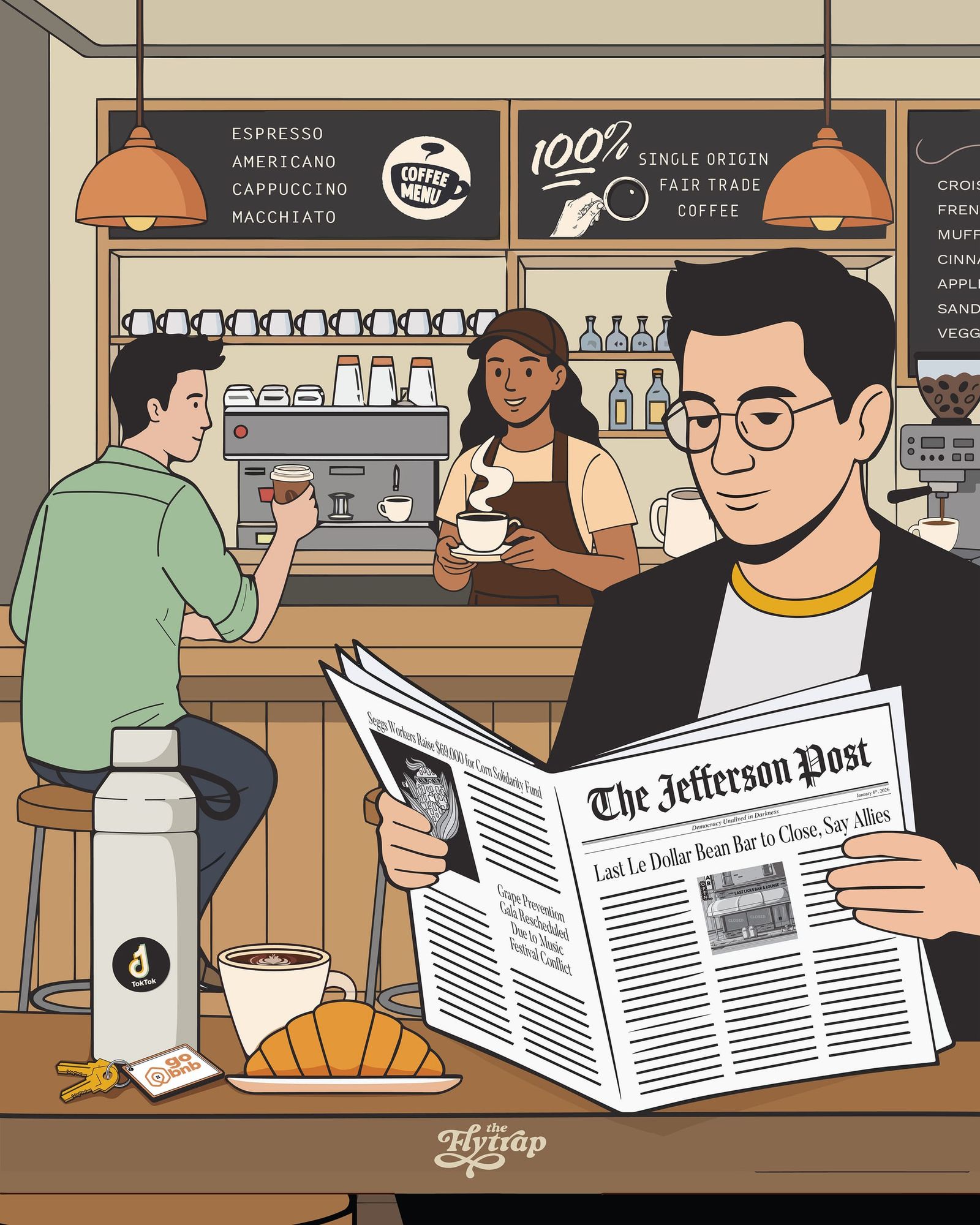
Unalived for death. Sewer slide for suicide. Accountant for someone involved in sex work—sorry, seggs work. Corn for porn. Le dollar bean for lesbian. In addition to using these words in spoken language, creators will use linguistic substitutions for a curse word in captions—itself an access issue for people who cannot hear the audio—or black out the word “suicide” or “drugs” when screencapping an article they’re discussing.
We live in a world of horrors but apparently we shouldn’t name them.
The efficacy of these tactics is questionable; if an algorithm can detect “dead” or “death,” “unalived” can just as easily be subjected to content filtering. Language recognition can identify “fuck” in spoken speech even when it doesn’t appear in captions. The algorithm learns quickly and voraciously; it’s unlikely algospeak is fooling anyone. Perhaps some people are turning to this speech in desperation, feeling like the key to unlocking views lies in their word use or in performing a fear of the algorithm as a pity ploy with viewers. Perhaps also, the puritanical absurdity involved in calling for a “trigger warning” for using words like “death” or writing a book with unlikeable characters is playing a role here. We live in a world of horrors but apparently we shouldn’t name them.
For the terminally online, algospeak is everywhere, and, like other memetic elements of culture, it’s spilling over into other spaces as well, which in itself may determine how long these terms linger in the English language. The bloom wears off the rose when your grandparents are talking about rizz.
Algospeak is not a new concept; people have been deploying euphemisms and sideways approaches to language for centuries, and these terms can become deeply embedded in our culture over time. Changes to language can arise for any number of reasons, good, bad, and neutral. The human capacity for eternal linguistic creativity and self-expression is unmatched whether people are developing insider language, attempting to evade detection, or simply having fun. It should be noted that this phenomenon is distinct from the development of dialects such as African American Vernacular English and Black American Sign Language, which may use cant and insider language as part of a larger dialectical shift and cultural identity.
The concern arises when algospeak also reflects a larger softening of language, one driven by the desire to pursue safety over reality, dilution over strength. Here, the algorithm is a stand in for something larger in the form of a fear of cultural censure if people speak frankly. Algospeak becomes a form of anticipatory compliance that in the process asserts a new status quo. There is a fear of being too confrontational, of making people uncomfortable. Using distancing and often infantilizing language like algospeak to make a concept seem more relatable—or less frightening—to those who might be alienated by language deemed confrontational serves only those in positions of power. Any conversation about the rise of algospeak should, can, and does include explicit criticism about the rise and cultural implications of softened language.
Don't miss the latest Cancel Me, Daddy, a Flytrap Media production...
Too Cute for Words
At a moment when we are surrounded by existential threats, I am starting to feel held hostage by whimsy, with algospeak often turning cutesy and cloying as it obscures the nature of the topic of conversation. “Unalived” carries with it the legacy of other euphemisms, such as “passed on,” that erase the nature of death as a simple fact of life and make it harder to speak candidly and thoughtfully about death (a topic very much on my mind right now). Whimsy can be a form of whistling in the dark and can itself turn into resistance, as with people reporting “icy conditions” as a hazard on their traffic surveillance devices to warn people about ICE activity in the neighborhood.
But this softening, or cuteification, reflects the larger societal trend of capitulation, in which people have convinced themselves that it’s necessary to compromise to win over the fence-sitters—those in the center, just within reach, who need a little nudge to join the cause. The connection between politics and the language we use isn’t hypothetical. Language is political. It is sharpened and used as a weapon just as much as it can be a tool for liberation and survival. Language shapes the way we think about people, communities, and causes, with shifts in language reflecting larger social trends, and for this reason, we have to be careful about how we deploy language. When are we carelessly serving the enemy rather than advancing the cause?
When people are fighting on an existential level for survival, policing the way they describe themselves is doing the work of the oppressor.
The sense of distancing in algospeak carries other dangers, as seen with the “smol bean” discourse. While “smol bean” is cuteifed internet speak for something sweet, adorable, and innocent, it has evolved into a pejorative of sorts for people who attempt to evade responsibility for their actions by implying that they are helpless, innocent, and too cute to be bad. The “I’m just a little guy!” defense weaponizes fragility to avoid accountability, making it impossible to push back on cruelty without being perceived as mean, one of those people.
Others may use cuteification to dress up hateful speech and conduct in what Carmen Van Kerckhove termed “hipster racism” in 2007. Edgy and “ironic” racism, sexism, disablism, and other oppressive language tries to smooth over the fact that it isn’t funny; it is in fact entrenching the very thing the speaker claims to be criticizing because the underlying problem has not gone away. This, too, is a form of capitulation, suggesting that people should be allowed to hide behind cuteness when they are committing acts of violence.
The use of language to drive and reflect shifts in social attitudes can be seen in how the language around disability has changed in the last 100 years. Disability was once widely described with terms such as “crippled” and “lame,” with disabled people considered figures of horror, pity, and charity. Then the socially-acceptable term became “handicapped.” Then it shifted to “people with disabilities,” human beings entitled to equality. Now, they are “disabled people” fighting for equity and justice. Language alone didn’t drive these changes in the social coding of disability, but it was an important part of the fight and had a direct impact not just on how people talk about disability, but also in how they conceptualize it and interact with the reality of disability.
Of course there are holdouts: some within the community are uncomfortable engaging with disability while some outsiders want to dictate the terms of how we talk about disability. Aware that language and culture are changing, these holdouts cling to terms such as “differently abled” and “diffABILITY,” which turn disability identity into something both grotesque and babyish. This infantilization is dehumanizing because it positions disabled people as helpless and lacking agency while also being “inspirational,” with these euphemisms perpetuating disablism by softening disability identity—and creating a sanitized, nonthreatening version of reality to cling to.
Love this week's art? You can find it at our merch store, along with other art from amazing freelance artists and Art Director rommy torrico, such as the classic travel poster-inspired illustration for "Does It Really Matter if ASMR is a Sex Thing?" which you may enjoy if you like s.e.'s work on internet culture!
Progress Is Hard
Softening undermines the work of progress, obscuring identities behind a shimmering veil and turning the messy realities of existing as a human into something quaint, gentle, and non-confrontational. People in positions of power—usually informed by larger societal systems of power and control such as white supremacy and disablism—get to be the arbiters of the “right” thing to say, which turns people advocating for equity and using language plainly into outlaws and extremists. When those people are living in bodies that have been criminalized, as in the case of LGBTQIA+ people, this softening of radical work carries an extra sting; when people are fighting on an existential level for survival, policing the way they describe themselves is doing the work of the oppressor.
In this context, softening and cuteification cultivates respectability politics, making it easier to turn to the people who are less frightening, who turn into authorities on the subject and claim they are “fighting stigma” and promoting “acceptance.” But perhaps we do not want to be assimilated and accepted. Perhaps we do not want our existence to be conditional on playing nice. Perhaps we want to bare our teeth.
Listen to this affable civil rights activist, not that scary one. Don’t use that kind of language because it frightens the normies, the people we are trying to win over. Flatten the legacy of radicals, turning everyone into a retroactive supporter of activists and advocates who had to fight not just against society, but sometimes their own communities. Pick and choose what you remember of people who shaped the world, seeking the simple and inspirational—“I have a dream”—and avoiding the harder work. Erase the complicated and inconvenient; not just Helen Keller's radical socialism, but her support of eugenics. Algorithmic softening grinds away the rough.
We believe we will overcome our oppression in the end. Sometimes we do, but it often comes at the expense of those same radicals, smoothing out the roles of marginalized people in their own liberation fights and replacing them with mealymouthed promises of equality and advancement within the rigid and depressing structures of the world. Martin Luther King Jr. was a radical who fought for economic and social justice and overall systemic change; cherrypicked pull quotes turn his commitments to nonviolence into passivity and yearning.
And as seen with the regression of trans rights, sometimes we do go backward. Regression isn’t necessarily the fault of cute euphemisms, but algospeak and cutesy language doesn’t help. In the case of trans rights as in so much else, algospeak can reflect larger social attitudes about which trans people to listen to and allowing people to pick and choose which elements of trans rights they support.
I don’t fear algospeak. I don’t hate it. I don’t think it degrades the quality of the English language any more than the neologisms of Shakespeare did. I despise algospeak because of the way it softens reality and makes it easier to dodge truth and difficult conversations. I loathe algospeak because of the way it can turn into the enemy of change, forward progress, and the celebration of and pride in marginalized identities. I am disgusted by algospeak because I am seeing cutesy terms being turned into broad generalizations for entire classes of people who want to avoid engaging with their reality.
In this climate of fractured reality, declining media literacy, and dwindling critical thinking skills, I know what algospeak symbolizes: a cuteified world with no sharp edges, ruled by glossy, pastel “influencers” who appropriate and repackage and simplify beautiful, complex, messy, jagged, dirty, and hard work for an audience that seeks appeasement and affirmation more than knowledge and challenge. This is an era where people do not do the reading, so we have the same superficial conversations over and over again. Everything we do needs to be monetized and being difficult doesn’t generate conversions or attract brand deals.
We should call things what they are. Sometimes that means they are ugly and messy, that the people we look up to are also complicated and flawed, that the work we need to do on ourselves and with each other is similarly demanding. We are grown ups in a grown up world now—and it’s time to talk like it.
This piece was edited by Andrea Grimes and copyedited by Evette Dionne.