Meet a Flytrap Founder: s.e. smith
Flytrap worker-owner s.e. smith talks peaches, death, and their favorite cultural criticism.

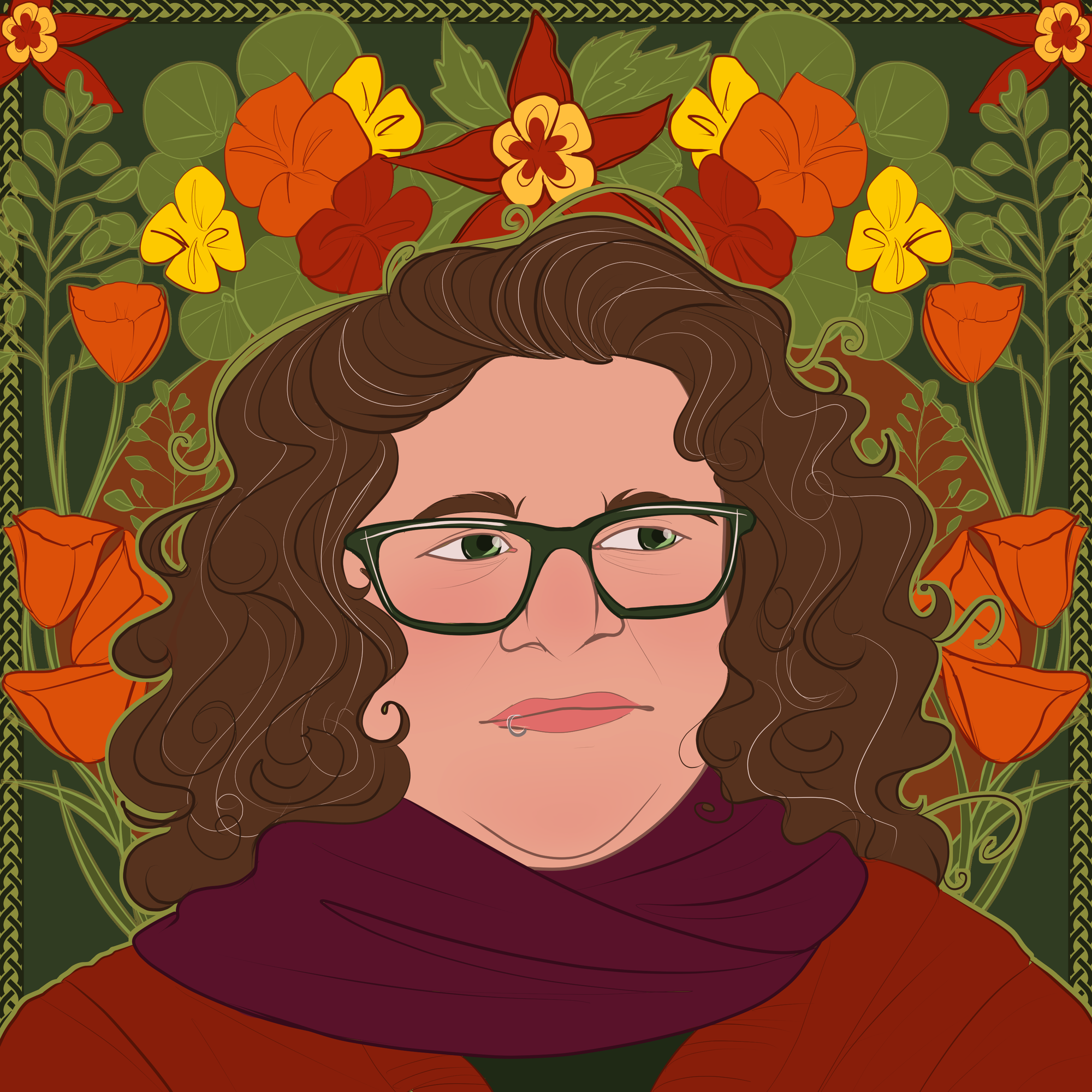
Welcome to our Meet the Founders series! Once a month, you will receive a juicy interview with one of The Flytrap's founders so you can get to know each of us better. We are what makes The Flytrap special, and we wanted to share why, offering a glimpse at each individual founder's politics, hobbies and reading habits. This month, we are meeting s.e. smith, author of All My Dead Cats and Other Losses: Practicing Good Grief in a Culture That Fears Mourning, incredible reporter and cultural critic, and The Flytrap's administrative extraordinaire. You can find s.e. on their website, sign up for their pet end-of-life advice column, and follow them on Bluesky. Meet them below!
The Flytrap: A big part of being a The Flytrap founder is believing that feminism is still a worthwhile political framework. So, what first brought you to feminism?
s.e. smith: My father. While he didn't explicitly describe himself as feminist, he both lived and voiced feminist values, even if I didn't realize it at the time. As I grew older I realized the things I took for granted in my house actually weren't everyone's default, and the word "feminism" best described the beliefs I grew up with. I also LEFT feminism for a while in the late 2000s-2010s because of the systemic disablism and failure to think critically about larger social structures that I encountered in mainstream feminism, choice feminism, and the like. These are absolutely still issues; the way certain people become mainstream figures and become popular faces of the movement does not escape notice. It was only after connecting with intersectional feminists; with more justice- rather than rights-oriented movements; and more explicitly decolonial, anti-capitalist feminists that I started coming back into feminism, and I DO think their work is a worthwhile political framework, as is expanding the way everyone understands and thinks about feminism, even if that makes people very uncomfortable.
TF: Another big part of The Flytrap is insisting that cultural criticism still matters, even at a time where media execs and Big Tech fascists keep insisting it's useless. Why do YOU think cultural criticism still matters?
ses: You cannot understand the world you live in and how you got there if you do not understand the cultural influences and structures around you. You need to apply critical thinking. You need to understand nuance and context. To do that, you need cultural criticism, and not just in the moment, but a long, rich history of work that people deeply engage with and talk about, remaining in conversation with each other. We are going to keep doing the same shit over and over, and relitigating the same boring-ass topics, if we cannot preserve, protect, and uplift cultural criticism—and people need to do the reading.
Hey there, gentle reader! Did you know we run original features every Tuesday for The Flytrap's paid members? Consider upgrading your membership to get full access to our archives! Our memberships start at $6.66/month for the budget conscious...
TF: What's your favorite thing to cook when you don't feel like cooking?
ses: Cheese plate, sorry I know it's incredibly basic of me, but you can toss some crackers and various cheeses and whatever things (olives, fresh fruit, dried fruit, etc) on a plate and call it good.
TF: What's a forgotten or underrated piece of feminist media that you love? Why is it feminist?
ses: I wouldn't necessarily say it's forgotten, but it's definitely not as well-read as it should be: Natasha Pulley's The Bedlam Stacks, which is part of the same universe as The Lost Future of Pepperharrow and The Watchmaker of Filigree Street, all of which are great. They're deeply queer, deeply anti-colonial, subversive, fantastical, surreal; they're such rich, fascinating books with so many threads to pull at. Her work is so luminous and provocative, and I wish more people were reading her!
TF: What are some of your favorite cultural criticism pieces that you've ever read and why?
Sarah Jaffe's The Country That Could Not Mourn is a searing indictment of how broken grief culture is in the U.S., through the lens of the pandemic, which is obviously of tremendous interest to me since I just published a book about grief, mourning, and the politics of same. A feature by Henry Wismayer about global tourism is another fantastic read—relatedly, Nicole's "Paradise Lost," on colonial tourism, along with Bani Amor's essential read on the colonization of ayahausaca from Bitch Magazine. And I remain obsessed with this absolutely delightful read from Zoë Sadokierski about typography as a storytelling tool in literary fiction (I spent a lot of time in printshops as a child and love typography as an art form, not just a way to spell out words). Finally, I link Jake Eaton's "The Unbearable Loudness of Chewing," which is about the absolute agony of living with misophonia, constantly: It explores contested illnesses, the struggle to get diagnoses, and how challenging it is to communicate about things going wrong in your brain that you can't just magically overcome.
You can find Flytrap posters, tees,trucker hats, and more at our merch store!
TF: What's a piece of cultural criticism you've written that you consider to be an addition to the Discourse(TM)?
This is such a funny one because as a writer, I so rarely get feedback (unless it's a bad take or people are really mad about it) so it's hard to tell if something is being widely read and cited and I don't know about it, or if it totally bombed, or what. My essay on cripspaces for Catapult Magazine is VERY widely referenced so it's clearly had a big impact on The Discourse. One of my favorites to write was this review of an absolutely execrable piece of literary fiction that was getting a lot of buzz that I also think speaks more widely to trends in that era of very dudebro, very weird and creepy sex, of litfic, and people still mention it to this day!
TF: What's your favorite feminist book and why?
Oof this is such a good question and I'm not sure I have a solid answer because it's so situationally dependent. Right now I am reading Crip Geneaologies, which is incredible and essential and fantastic, deeply rooted in disability justice, also, but disability feminism and feminisms more broadly. It also welcomes a variety of modes of communication from formal academia to more freeform, and was a highly collaborative editorial process. I really liked how the editors (Mel Y Chen, Alison Kafer, Eunjung Kim, and Julie Avril Minich) talked through how they approached the work in a very conversational way to kind of open things up to the reader. In the process, they got me thinking more broadly about what truly collective, collaborative work looks like.
TF: Why did you agree to be a part of The Flytrap in the first place?
ses: I've worked with Andrea off and on over the years and when she approached me in December 2023(!) about "an unnamed bloggy project" I was intrigued. I miss a lot of things about the golden age of feminist blogging, we desperately need more feminist criticism in the world (see above), and it's getting harder and harder to place stories as a freelancer, especially what I think of as my weird little stories. I wanted space for people to tell stories that aren't getting surfaced, to go in deep on special interests, to have a little fun, and that's what Andrea proposed. It's also so essential to keep up the rich legacy of feminist cultural criticism, to keep putting this work out there and talking about it and forcing people to read it, and I felt like this project was really aligned with my values there.
If you like s.e.'s work at The Flytrap, you're gonna LOVE their upcoming book on finding good grief in a culture that fears mourning, exploring grief as a collective social project, not a private and personal matter. All My Dead Cats and Other Losses is out July 28th, so pick up a present for your future self!
TF: What are your hobbies?
ses: Eating peaches, obviously, if that counts as a hobby. The other would be quilting; I really like engaging my hands and brain in a very different way than my writing, which I think is really important. Quilting is also an interesting challenge for me because it involves a lot of math (many projects take me longer or require more seam-ripping because of my dyscalculia). Having the ability to form a mental image is also really helpful for a lot of people, and I have aphantasia, so I... can't do that, which means a lot of sketching, messing around with fabrics, cutting things out and rearranging them physically, realizing they aren't doing what I want them to do, etc. I think it's important to push yourself to do things that don't come naturally to you.
TF: Who is your least-favorite billionaire?
ses: It's gotta be Elon Musk, not just because (on paper) he's far and away the wealthiest man in the world. While he's a generally shitty person and it's so hard to pick just one reason, for me it's the harm he caused by destroying USAID, which is going to cause millions of needless deaths.