Eat, Pray, Spend
Priv-lit and the new, enlightened American dream.
The Flytrap is thrilled to be collaborating with Bitch Magazine to reprint select posts from their archive, making the history of feminist cultural criticism more accessible. In that spirit, these posts will never be paywalled, but you can become a member to support them. If you're a former Bitch writer or reader with an article you'd love to see in print again, reply to this email with the details. If you're a reader who wants to support this work, consider subscribing!
This article was originally published in the Summer 2010 Action issue of Bitch Magazine.
For decades, self-help literature and an obsession with wellness have captivated the imaginations of countless liberal Americans. Even now, as some of the hardest economic times in decades pinch our budgets, our spirits, we’re told, can still be rich. Books, blogs, and articles saturated with fantastical wellness schemes for women seem to have multiplied, in fact, featuring journeys (existential or geographical) that offer the sacred for a hefty investment of time, money, or both. There’s no end to the luxurious options a woman has these days—if she’s willing to risk everything for enlightenment. And from Oprah Winfrey and Elizabeth Gilbert to everyday women and femmes siphoning their savings to downward dog in Bali, the enlightenment industry has taken on a decidedly feminine sheen. It will probably take years before the implications for women of the United States’ newfound economic vulnerability are fully understood.
Present reports yield a mix of auspicious and depressing stats: According to the U.S. Bureau of Labor Statistics, American workers made a median wage of $1,194 per week in the first quarter of 2025, which adds up to $62,088 per year, while the cost of living either equals or exceeds this number in most states. Yet even as recent reports on joblessness, economic recovery, and home foreclosures suggest that no one is immune to risk, the popularity of women’s wellness media has persisted and, indeed, grown stronger.
“Live your best life!” Oprah Winfrey has intoned on her website and in her magazine, with exhausting tenacity. Eat kale. Lose weight. Invest in timeless cashmere. Find the perfect little black dress. But though Oprahspeak pays regular lip service to empowerment, much of Winfrey’s advice actually moves women away from political, economic, and emotional agency by promoting materialism and dependency masked as empowerment, with evangelical zeal.
It’s no secret that, according to America’s marketing machine, we’re living in a “postfeminist” world where what many people mean by “empowerment” is the power to spend their own money.
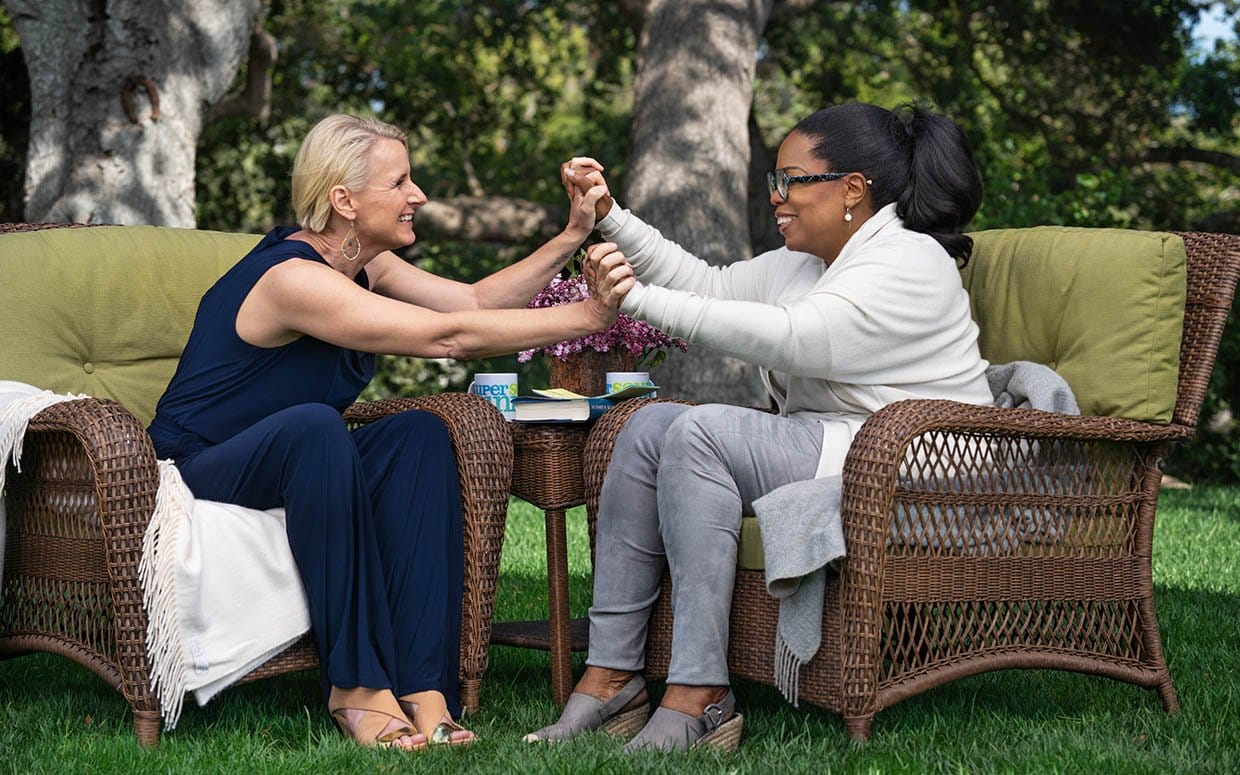
As Karlyn Crowley writes in the 2012 Stories of Oprah: The Oprahfication of American Culture, Winfrey has become the mainstream spokesperson for New Age spirituality because “she marries the intimacy and individuality of the New Age movement with the adulation and power of a 700 Club–like ministry.” And not surprisingly, it was the imprimatur of Oprah’s Book Club that made Elizabeth Gilbert’s Eat, Pray, Love: One Woman’s Search for Everything Across Italy, India and Indonesia the publishing phenomenon it continues to be.
The book remained on The New York Times bestseller list for 187 weeks, earned Gilbert a spot on Oprah Winfrey's SuperSoul 100 list in 2016, and continues to be a popular recommendation in largely white and economically privileged circles. Gilbert’s follow-up, Big Magic: Creative Living Beyond Fear, is a self help book for people who wish to follow in her footsteps, though the degree to which the book offers a practical pathway is a subject of debate.
Eat, Pray, Love detailed Gilbert’s decision to leave an unsatisfying marriage and embark on an international safari of self-actualization. (Publisher Viking subsidized the “unscripted” yearlong vacation.) Gilbert ate exotic food, meditated in exotic places, and had exotic romantic interludes; both culture clashes and enlightenment ensued, as did Gilbert’s ham-fistedly paternalistic attempt to buy an impoverished Indonesian woman a house. The book could easily have been called Wealthy, Whiny, White. It’s hardly reasonable to demand that every woman who wishes to better her life be poor, or nonwhite, or in some other way representative of diversity in order to be taken seriously. But Eat, Pray, Love and its positioning as an Everywoman’s guide to whole, empowered living embody a literature of privilege and typify the genre’s destructive cacophony of insecurity, spending, and false wellness.
Let Them Eat Kale
Eat, Pray, Love is not the first book of its kind, but it is a perfect example of the genre of priv-lit: literature or media whose expressed goal is one of spiritual, existential, or philosophical enlightenment contingent upon women’s hard work, commitment, and patience, but whose actual barriers to entry are primarily financial. Should its consumers fail, the genre holds them accountable for not being ready to get serious, not “wanting it” enough, or not putting themselves first, while offering no real solutions for the astronomically high tariffs—both financial and social—that exclude all but the most fortunate among us from participating.
The spending itself is justified by its supposedly healthy goals—acceptance, self-love, the ability to heal past psychic wounds and break destructive patterns. Yet often the buzz over secondary perks (weight loss, say, or perfect skin) drowns out less superficial discussion. Winfrey, again, is a chief arbiter of this behavior: As Stories of Oprah contributor Jennifer L. Rexroat points out, Winfrey presents herself as a “de facto feminist” with a traditional American Dream background who refuses to succumb to wifedom and enjoys pampering herself.
Sometimes that involves espousing the works of spirituality writers Gary Zukav or Eckhart Tolle, who both appeared regularly on her show. Sometimes it means talking about weight gain and self-loathing. Sometimes it necessitates buying a diamond friendship pinky ring. It’s no secret that, according to America’s marketing machine, we’re living in a “postfeminist” world where what many people mean by “empowerment” is the power to spend their own money.
Twenty- and thirtysomething women seem more eager than ever to embrace their “right” to participate in crash diets and their “choice” to get breast implants, obsess about their age, and apply the Sex and the City personality metric to their friends (Are you a Miranda or a Samantha? Did you get your Brazilian and your Botox?). Such marketing, and the women who buy into it, assumes the work of feminism is largely done. Perhaps it’s because, unlike American women before them, few of the people either making or consuming these cultural products and messages have been pushed to pursue secretarial school instead of medical school, been accused of “asking for” sexual assault, or been told driving and voting were intellectually beyond them. This perspective makes it easy for the antifeminism embedded in the wellness jargon of priv-lit to gain momentum. And an ailing economy makes this thinking all the more problematic.
“Splurging on luxury is a real no-no in this crap economy,” a blogger at YogaDork wrote in 2009 in a post titled “The All-Inclusive Vacation for the Recession Torn (The Acceptable Splurge).” “But what if it’s for a self-helpy learning experience?” Pondering the importance of health over penny-pinching, the blogger suggested that if “yogis and non alike” thought a retreat worth scrounging for, they should get on it. And indeed, if self-helpy is on the menu, people seem to be buying it, or at least buying into it. In fall 2009, the Los Angeles Times ran a piece about well-off women (and some men) leaving their full-time jobs to meditate in seclusion for three years, to the tune of $60,000 a year. Another feature on young, female self-help gurus (their exact qualifications for guruhood remain murky) charging hundreds of dollars an hour to advise other women on spirituality and eating well was granted prime real estate on the front page of the New York Times’ Style section.
Sarma Melngailis, a New York restaurant owner who wrote about eating raw and organic food on the blogs welikeitraw.com and oneluckyduck.com, promised her readers—most of them women—that if they could just give up their Dunkin’ Donuts coffee and replace it with her $9 coconut water and $12 nut-milk shakes they, too, could be happy and healthy. The now-famous Skinny Bitch cookbook franchise plumbed even more sinister depths in its insistence that women could stop nighttime snacking with the oh-so-simple fix of hiring a personal chef with vegan culinary training. Actor Gwyneth Paltrow’s web venture, GOOP, used catchy, imperative section headings (“Get,” “Do,” “Be”) and the nonsensical tagline “Nourish the inner aspect” to neatly establish a rhetorical link between action, spending, and the whole of existence.
Even Julie and Julia, the blog that became a book that became a hit movie, is complicit in spreading the trend. Julie Powell’s story—that of an ennui-ridden professional whose journey of self-discovery involves cooking her way through Julia Child—features one-meal shopping lists whose cost rivals standard monthly food-stamp allotments for many American families. Priv-lit perpetuates several negative assumptions about women and their relationship to money and responsibility. The first is that women can or should be willing to spend extravagantly, leave our families, or abandon our jobs in order to fit ill-defined notions of what it is to be “whole.” Another is the infantilizing notion that we need guides—often strangers who don’t know the specifics of our financial, spiritual, or emotional histories—to tell us the best way forward.
The most problematic assumption, and the one that ties it most closely to current, mainstream forms of misogyny, is that women are inherently and deeply flawed, in need of consistent improvement throughout their lives, and those who don’t invest in addressing those flaws are ultimately doomed to making themselves, if not others, miserable. While priv-lit predates the current recession by at least a few years, the genre’s potential for negative impact is greater these days than ever before. Today’s “recessionista” mindset promotes spending quietly over spending less.
Priv-lit takes a similar approach: Hiding familiar motives behind ambient lighting and organic scented candles, the genre at once masks and promotes the destructive expectations of traditional femininity and consumer culture, making them that much harder to fight. As Jezebel.com blogger Sadie Stein noted in September 2009, “nueva-Bradshaws have hung up their Manohlos [sic] and retired their Cosmos…and are pursuing banality differently…it’s pink-hued, candy-coated girly spirituality.” The blog entry, which mentions Eat, Pray, Love; Skinny Bitch; and The Secret, is a response specifically to the odious “new gurus” article from the New York Times, but the point can also be seen as a cutting and accurate criticism of priv-lit as a genre.
The irony here is that in many cases, the paths to enlightenment being sold did not even work for their engineers: The Guardian reported in 2025 that Gilbert later spiraled down a dark path of addiction and codependency as she fought to support a friend who had a terminal cancer diagnosis while navigating addiction. And Melngailis’ journey to rock bottom received far more tabloid coverage: After her employees stopped receiving their paychecks, the restaurant abruptly closed, and in 2016, CNN and other media outlets reported that she went on the run with her gambling-addicted partner.
She later pleaded guilty to grand larceny, scheming to defraud, and criminal tax fraud, while several other charges relating to having been a fugitive from justice were dropped (the saga is covered in detail in the Netflix documentary Bad Vegan). We are sharing this not to shame or embarrass these women for surviving what must have been deeply traumatizing experiences, but rather to point out that their own supposedly reliable recipes for enlightenment were far from enough to save them from their demons. We also want to commend the vulnerability and accountability they have shown as they have pursued real healing and the enlightenment that accompanies it.
Don't miss the latest Cancel Me, Daddy, a Flytrap Media production...
In Dreams Begin Responsibilities?
Perhaps priv-lit is a manifestation of how we love to fantasize about things we don’t—or can’t—have. In the case of priv-lit, the fantasy has turned on its makers. Rather than offering a model to aspire to through consistent attainment of progressive, realistic goals, priv-lit terrorizes its consumers with worst-case scenarios and the implication that self-improvement is demonstrated by “works” of spending. Of course, it is the right of any woman who works hard for what she has to spend her money to make her life better. But the pressure to obtain happiness by buying a certain book (like Eat, Pray, Love or Gretchen Rubin’s The Happiness Project), attending a yoga retreat, or hiring a guru moves women further away from themselves, the simplicity espoused in positive psychology literature, and the type of careful reflection necessary to maintain inner peace in the long term.
The story priv-lit tells is that true wellness requires extreme sacrifices along economic, family, and professional lines, but those who make them will be rewarded and attain permanent enlightenment of one kind or another. (Gilbert herself was rewarded twice over for her globe-trotting victories in her spiritual memoir—she married a hot Brazilian man and landed another bestselling book, 2010’s Committed, as a result.) Unfortunately, that story is a lie: As one purveyor of high-end life-coaching services (who, for obvious reasons, wishes to remain anonymous) comments, “In our line of business, we have a saying: ‘Don’t fix the client.’” Once mentors teach clients to attain freedom and enlightenment, they can say goodbye to the high premiums they earn by telling clients they need more help.
“One of the brilliant parts of the self-help genre as a whole is that there are these various contradicting threads or themes, all woven together, and emphasized differently at different times,” says Micki McGee, Ph.D., a sociologist and cultural critic at Fordham University and the author of Self-Help, Inc: Makeover Culture in American Life. “Self-improvement culture in general has the contradictory effect of undermining self-assurance by suggesting that all of us are in need of constant, effortful (and often expensive) improvement. There is the danger of over-investing in this literature not only financially, but also psychologically.”
McGee, who in researching her own book spent five years immersed in self-help literature, is quick to point out that this tendency toward spending for self-improvement is long-standing. But in the current economic climate, the real financial implications for those who do, or try to, invest in these ways may be worse than in healthier economic times, while the spending itself may be growing all the more fetishized.
Since the late 1960s, economic phenomena such as wage stagnation combined with the increasing costs of housing, medical care, and other basic necessities have meant that, for most Americans, time really does equal money. “Increasingly, people who actually have the money to take a year off and travel in India or go to a thousand-dollar yoga retreat are in short supply,” notes McGee. “In the context of the recession, we’re seeing an emphasis on simplicity and frugality, but embedded within that emphasis is a subtext of consuming more”—imported, she points out, from contemporary self-help literature of all kinds.
McGee links the persistence of these counterintuitive ideals to the phenomena of social stratification written about by French sociologist Pierre Bourdieu. In his landmark 1984 book Distinction: A Social Critique of the Judgement of Taste, Bourdieu explained that cultural and aesthetic preferences both indicate and shape class stratifications, because trends in these preferences seemingly map individuals’ positions in social hierarchies. As McGee puts it, within status-quo class systems, “Taste and other types of cultural capital are emblematic of both status attained and status putatively deserved.” So those who pray at the altar of priv-lit operate under the false assumptions that 1) investing concretely ensures attainment of elite socioeconomic status and 2) having invested demonstrates the deserving nature of those who do.
In times of financial stress—when those who want exist in even greater proportion to those who have—this feedback loop may be intensified, because the desired is that much more unattainable and the consequences of failure, namely the implication that those who do not get their lives together according to the prescribed boundaries of priv-lit will end up being so utterly screwed up that they risk losing their jobs, houses, or independence, among other things—seem that much worse. Priv-lit has transformed Virginia Woolf’s “Room of One’s Own” into an existential space accessed by way of a very expensive series of actual rooms—a $250-an-hour yoga studio, a cottage in Indonesia, and a hip juice bar in Brooklyn Heights.
The genre is unique in that it reflects an inversion of its own explicitly expressed value system: Priv-lit tells women they must do expensive things that are good for the body, mind, or soul. But the hidden subtext, and perhaps the most alluring part of the genre for its avid consumers, is the antifeminist idea that women should become healthy so that people will like them, they will find partners, they’ll have money, and they’ll lose weight and be hot. God forbid a dumpy, lonely, single person should actually try to achieve happiness, health, and balance for its own sake. It’s the wolf of the mean-spirited makeover show or the vicious high-school clique in the sheep’s clothing of wellness.
Turning the Tide
The truth is that many of us are barely holding on to the modest lives we’ve struggled to create, improving ourselves on a DIY basis, minus the staggering premiums, with every day we get up, go to work, and take care of ourselves and our families. Priv-lit is not a viable answer to the concerns of most women’s lives, and acting as though it is leads to nowhere good. It’s high time we demanded that truer narratives become visible—and, dare we say it, marketable.
As for Oprah, her show ended in 2011, but her media empire has made her a billionaire, forever disconnected from the day-to-day struggles of her nonwealthy counterparts. But the future also holds brighter possibilities. Paige Williams, whose story can, somewhat ironically, be found on Oprah.com, was depressed to the point of debilitation, clinically obese, unemployed, and broke when she began her efforts to change her life. Living with her mother and often too sick to get out of bed, she clearly was not living her “best life.”
Williams postponed taking a job to spend two months regaining control of her body, mind, and life via an intensive, 60-day Bikram yoga regimen. Parts of Williams’ story fall well within the range of self-help and priv-lit tropes: She waxes poetic about squeezing into a pair of skinny jeans, and many would argue that merely having the resources to get a medical diagnosis of depression and obesity (to say nothing of the Bikram regimen itself) is solid proof that our protagonist is more comfortable than the average American.
But the frank admission that any such intervention is a sacrifice, and a risky one at that, is evidence of both a more genuine voice and of a protagonist who cares about being healthy overall rather than demonstrating class membership or pursuing mainstream ideals of beauty, marriageability, and general worthiness. And the fact that her story appears in such a mainstream context means that more women are being exposed to this comparatively toned-down approach. Maybe not a solution to the problem of priv-lit, but a good step toward finding one.
Even better are movements like the Buy Nothing Project, whose website offers participants a way to “discover what your neighbors are giving away and find a new home for what you no longer need.” As of this writing, the Buy Nothing Project is active in 50 countries, and helps participants move an estimated 2.6 million items, diverting about 162,000 tons of waste from landfills each year, via more than 8,000 social media groups. In many of these discussions, women especially note feeling less burdened but also a sense of anxiety around “detoxing” from participation in conspicuous and not-so-conspicuous consumption.
Rather than offering a model to aspire to through consistent attainment of progressive, realistic goals, priv-lit terrorizes its consumers with worst-case scenarios and the implication that self-improvement is demonstrated by “works” of spending.
The COVID pandemic, still ongoing, drove many disabled and high-risk women out of the workforce permanently and created significant financial hardship for many other nonwealthy workers who were furloughed or simply laid off due to stay home orders and the collapse of the service industry. Neighbors bartered and shared resources to help those who had lost their income, become gravely ill or disabled, or could not return to in-person work because of the life-threatening risks it posed. Free, trade, and barter groups on social media experienced an uptick in popularity, whether the group was for houseplant enthusiasts who wanted to trade cuttings or disabled communities trying to help those with the most need. Many women also reported fully opting out of the “feminine beauty ideals” as worsening or newly diagnosed neurodiversity or pain conditions, brought about by the dual physical and psychological stressors of the pandemic, limited their ability to wear high heels, bras, and restrictive clothing.
That said, many participants have reported feeling a detox of sorts, complete with cravings to consume (shopping and spending, research shows us, lights up similar dopamine pathways in the brain to addictive substances such as opiates or alcohol). Gilbert’s and Melngallis’ epilogues also place false healing ventures in the context of addiction, mental illness, and the denial that are hallmark symptoms of both. When viewed as a kind of mass denial of realities that might facilitate more authentic healing, the priv-lit genre and its fanatical supporters suddenly take on a whole new dimension, one that suggests we ought to respond with deep concern for both makers and adherents and be supportive of any attempts they make to break free of the many bad habits and thought patterns the genre promotes.
The admission that many of these women feel intense discomfort as they grow accustomed to doing without the materialism that has for so long been tied to ideas of what makes women successfully feminine is a crucial and revolutionary first step that more women should feel safe taking. And not buying is, by definition, free, meaning that anyone with motivation enough and a desire to say no to the status quo can participate in this form of soul-searching. (Though, of course, the project operates under its own assumption—namely, that not spending money is a choice rather than an absolute necessity.) Williams’ tale and the clothing embargo are evidence of a progressively nontraditional movement of women committed to replacing elitist, consumption-based models of spiritual salvation and existential peace with genuine bids to do a lot with a little, and to stop listening to top-down directives for how to have good lives.
Now that the mainstream considers the pandemic largely over (even as many of us remain unable to work in an office setting or enter a healthcare establishment without masking), the idea of treating oneself through exorbitant spending seems to be making a comeback of sorts. Juice fasts, $18 detox smoothies, fad diets, and more abound, with increasingly absurd price tags far exceeding inflation in many cases. The Sex and the City reboot And Just Like That wrapped up its third and final season in August 2025 with the same amount of shopping-as-therapy metaphors (though the show does include a token trans character this time around).
And we need look no further than Mike White’s wildly popular White Lotus series or Netflix’s Apple Cider Vinegar to be reminded how being miraculously healed through expensive wellness retreats is still a very popular fantasy among the wealthy and aspirationally wealthy. It is promising, though, that the embedded attitude of skepticism toward wealthy and oblivious adherents, as well as representations of the movement’s purveyors as increasingly flawed and fraudulent does contain important seeds of cultural critique.
More than 15 years after this article’s initial publication, it remains our hope that if more women become willing to put aside their fears, face their demons, open their eyes to cost-free or inexpensive paths to wellness, and position themselves as essentially worthy instead of deeply flawed, priv-lit will eventually migrate to a well-deserved new home: the fiction section. And once that happens, we might just succeed in showing that for every wealthy and insecure woman who can pony up to reach great heights of self and spending, there are thousands more whose lives are comparatively uncharmed, who are happier working with creative and healthy alternatives instead of spending on what they’re terrorized into wanting, and whose stories will, someday, be valued for the strength they communicate, not the fantasies they sell.
This story was updated to include more up-to-date references, dates, and statistics.
Diana Barnes-Brown is a poet, writer, and cultural critic who lives in Portland, Oregon, with her partner and cats. As a queer, disabled person with both PTSD and a physical disability, her exploration of healing and medical care in the present day looks at wellness through the lens of financial, physical, and psychological inclusion and accessibility. Her work has been featured in American Letters & Commentary, Hawaii Review, Fence, Sonora Review, The Farmer General, and Bitch Media (RIP).
Joshunda Sanders is the author of seven books, most recently, Women of the Post (Park Row, 2023), a 2024 Gotham Book Prize finalist. She has also been selected for a 2024 NYSCA/NYFA Fellowship in Fiction and a 2018 Fiction Award from the Bronx Council on the Arts, the Bronx Recognizes Its Own (BRIO). She is the creator of Black Book Stacks, which publishes on Substack and YouTube. Her other titles include two children’s books, I Can Write The World and A Place of Our Own; the journalism textbook, How Racism and Sexism Killed Traditional Media: Why the Future of Journalism Depends on Women and People of Color; a memoir, The Beautiful Darkness: A Handbook for Orphans; and a novella, All City. She lives in her hometown, The Bronx, with her family.